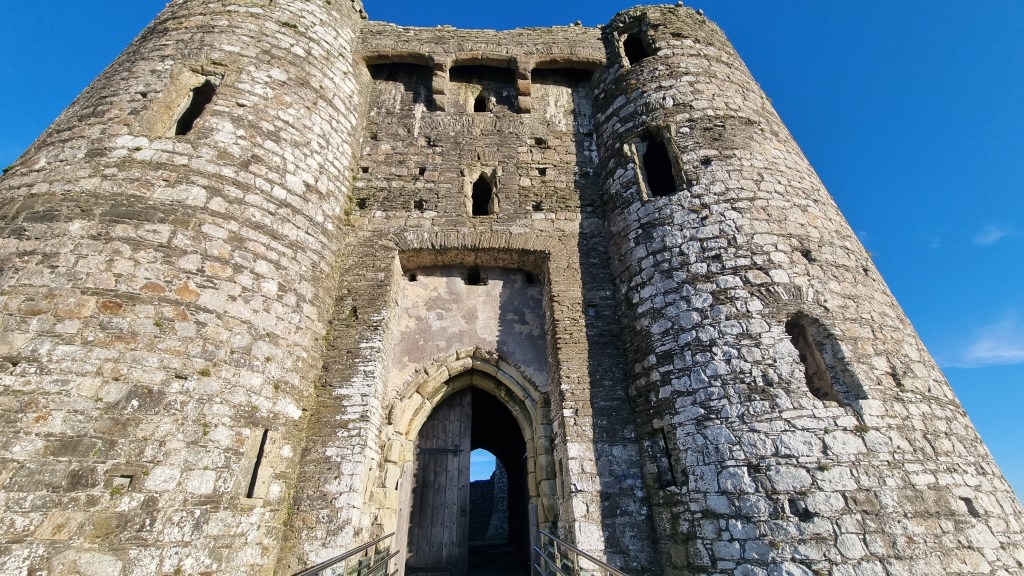
Upon looking up at the massive gatehouse, it’s here that the scene in Monty Python was shot and began before jetting off to Castle Doune in Scotland where it was filmed. It seemed very fitting that they chose Kidwelly as a intimidating point of interest for their opening shot as the gatehouse looks mighty and fortified, as an attacker, you would have to really do some thinking into being able to infiltrate through the thick walls and all the defensive points surrounding the castle.
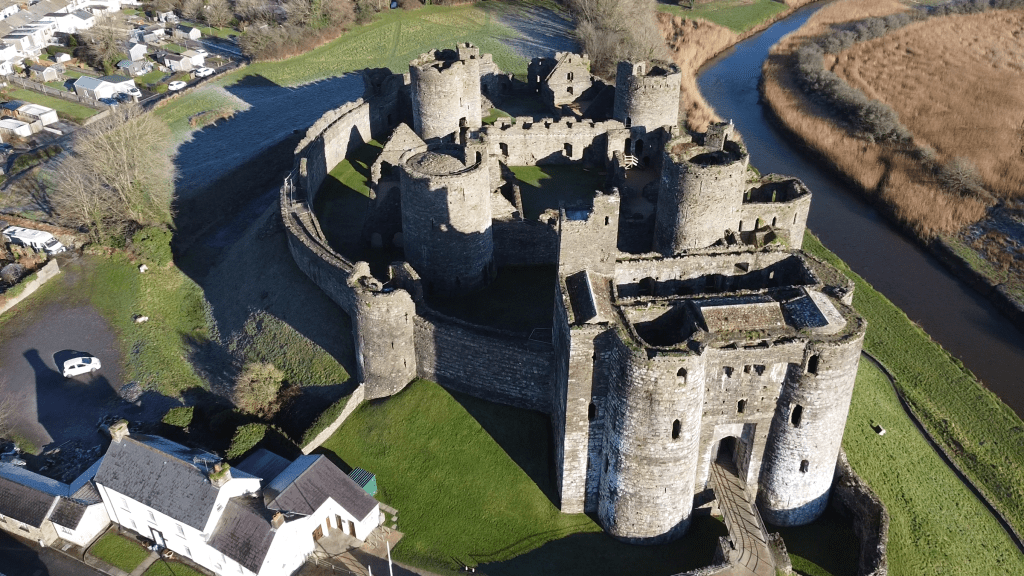
First constructed in 1114, Kidwelly Castle’s layout is of a concentric Norman plan. It was built on a ridge overlooking the River and though originally built in timber it later came into royal possession and was strengthened against a possible French invasion to come. The first castle was built by the bishop of Salisbury, Roger De Caen, a very rich, important and influential man who had already constructed a number of stone castles in England, but Kidwelly was a frontier effort. It was built in wood and constructed in a half ringwork shape which you’ll be able to see later from the air. It was shaped like this to use the river and its steep bank to protect its eastern defences, Roger had also founded a priory on the other side of the river.

Later, shortly after the death of King Henry the 1st, the Welsh saw an opportunity to regain their lands back from the chaos that was unfolding in front of them and one iconic and dramatic event that really shook things up was the courageous battle of Gwenllian, the fiery wife of the Deheubath Prince, Gruffydd ap Rhys, against the Normans near Kidwelly Castle. It was in 1136 that the time arose for the Welsh to take back their lands that was lost to the marcher lords and the revolt against the Normans had began in the south of Wales.
Whilst her husband was in another neighbouring town seeking some alliance from their armies, Gwenllian came under attack by the Normans, which was led by Maurice de Londres, so she was forced into raising an army ready to attack. The battle was fought on lands nearby the castle, fighting alongside her were here two sons, picture’s painted of this day say that she marched in the front, looking like the queen of the amazons with her strikingly long red hair and poised ready for battle, leading her men against the Normans in a bloody battle. Reinforcements of the Norman army were marching up to join them, so the princess had half of her men try and delay them, but their efforts were soon destroyed and over run, leaving her trapped in the middle of two Norman armies. The battle was quite short in comparison, just purely by not having enough man power to back up the Norman soldiers. Herself and her 20 year old son Morgan, were caught, captured and chained up and then marched throughout the town like common prisoners.

The sad ending of them both had the two of them executed brutally, Gwenllian had pleaded for her sons life, but that plea was never listened too by de Londres and he had commanded that the son was to be killed, and her head to be beheaded over her sons body. Many people still believe that her ghost haunts the castle and the surroundings wishing to be reunited with her family. The princess was a warrior, a mother and a brave leader and will always be remembered. She is celebrated as rightful local hero and a memorial to her stands just outside the castles gatehouse.
The early castle changed hands a number of times. After Roger’s death in 1137 it came into the possession of Maurice de Londres, Lord of Kidwelly. In 1190 The Lord Rhys, a powerful Welsh prince conquered the castle, but it was back in Norman hands shortly after 1200. His son captured Kidwelly again and burned the castle. By the time of the Welsh uprising in 1257 it was in the hands of Patrick de Chaworth via marriage. The settlement at Kidwelly was partly destroyed, but the castle wasn’t taken.
The stone castle was probably started in the early 1270s when Payn de Chaworth came of age. The inner ward was completed in the first phase of construction along with the great hall and solar. Payn died in 1277 and it’s likely that he didn’t see the inner ward completed. Payn’s daughter Matilda married Henry, 3rd Earl of Lancaster, in 1298. Henry brought money and English influence to the continuing construction of Kidwelly.
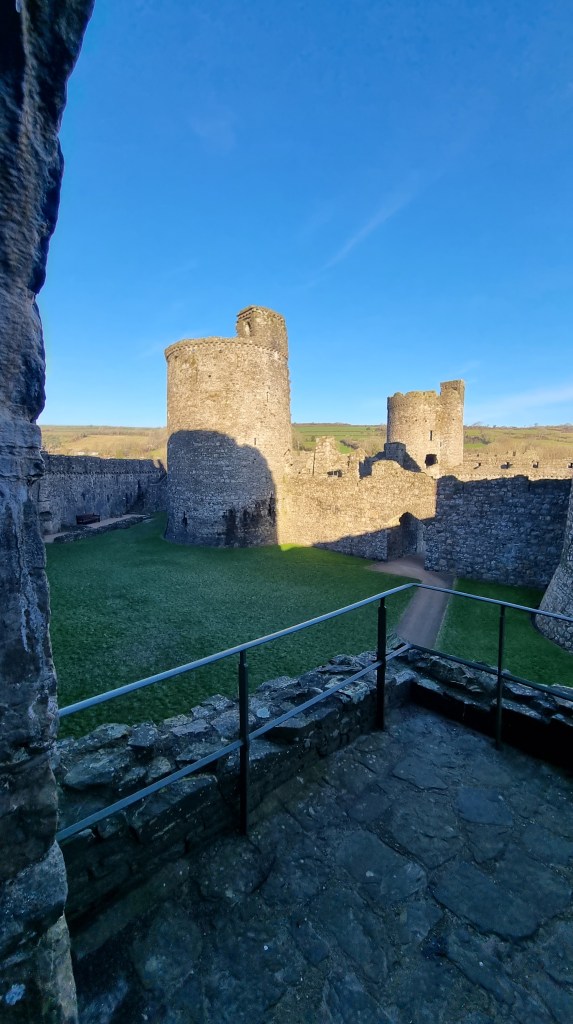
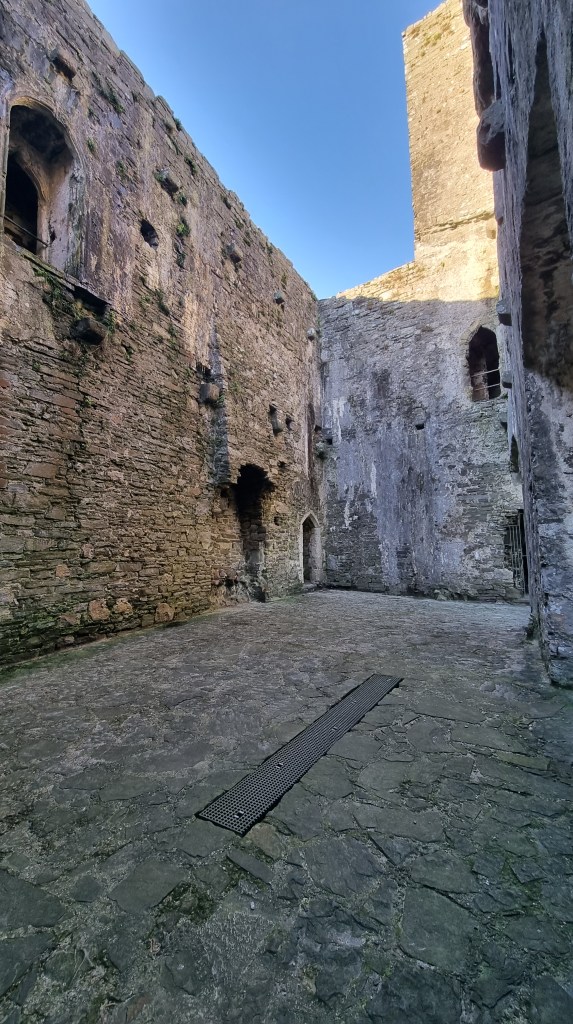
Henry constructed the outer curtain and the strong keep-gatehouse. He also extended the castle walls around the town and rebuilt the priory church across the river. In 1403 Owain Glyndwr’s forces besieged Kidwelly and burnt the town. He didn’t get into the castle though as it was relieved by English forces three weeks later. Kidwelly passed down but eventually it belonged to the Crown. The river estuaries of Wales were vulnerable to a French landing at the time and they wanted to have strong defences in place and by 1422 the gatehouse was finally complete.
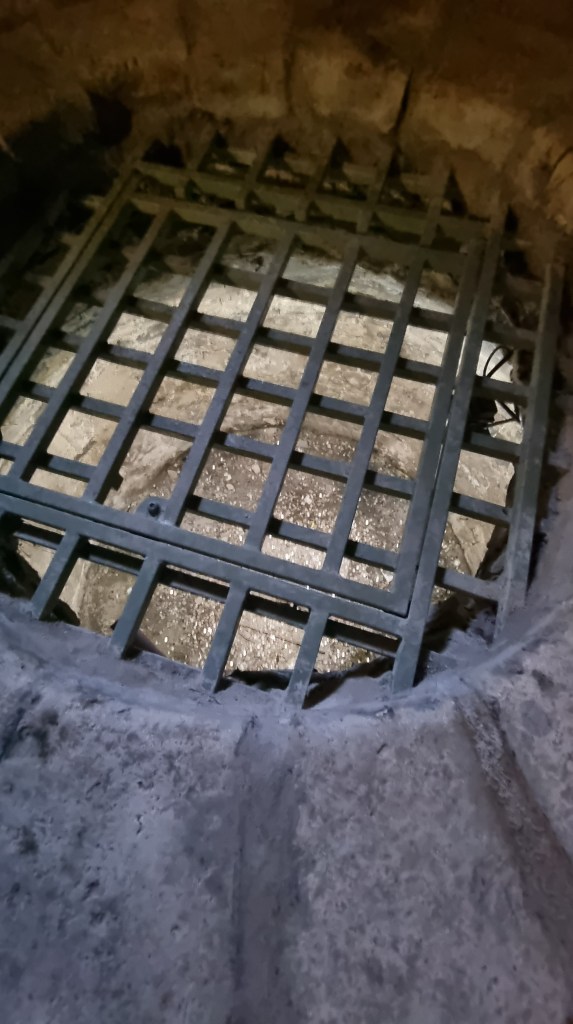
As we step inside the dark rooms of the south gatehouse we walk around the what was creepy and eerie prison cells. All in all this room was fitting for what its purpose was, it was cold drab and damp and also quite small, so you would almost feel claustrophobic in its day. Unfortunately a Norman invention and not a nice one at that was what’s named an oubliette, the French meaning for a secret dungeon cum basement room or a bottle dungeon, that was only assessable from the hole at the top in a high ceiling, the purpose of this was that the victims would be dropped into it, with the idea that they would starve and dehydrate to death and have no way of getting back out, a truly horrible and barbaric way to go.
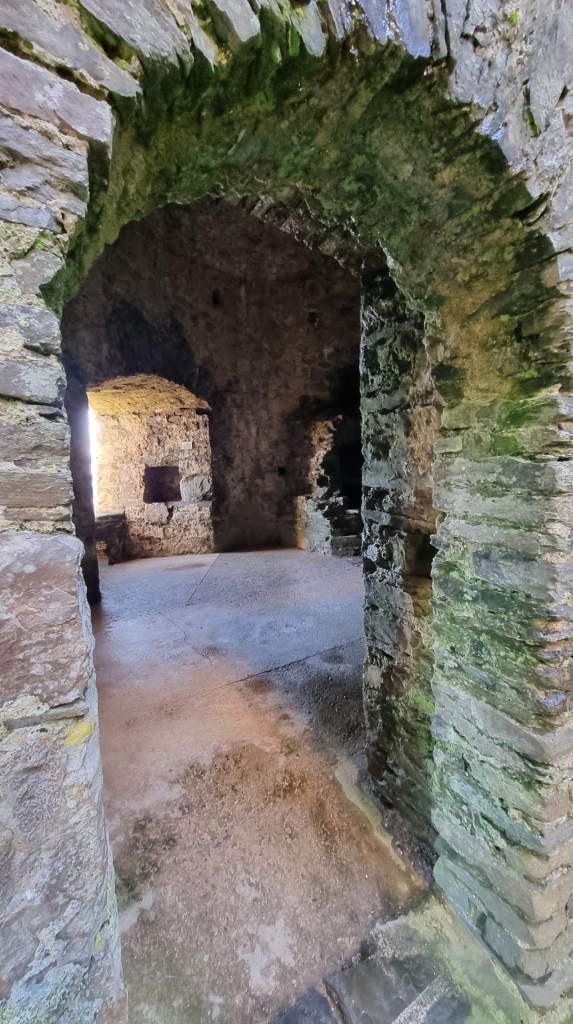
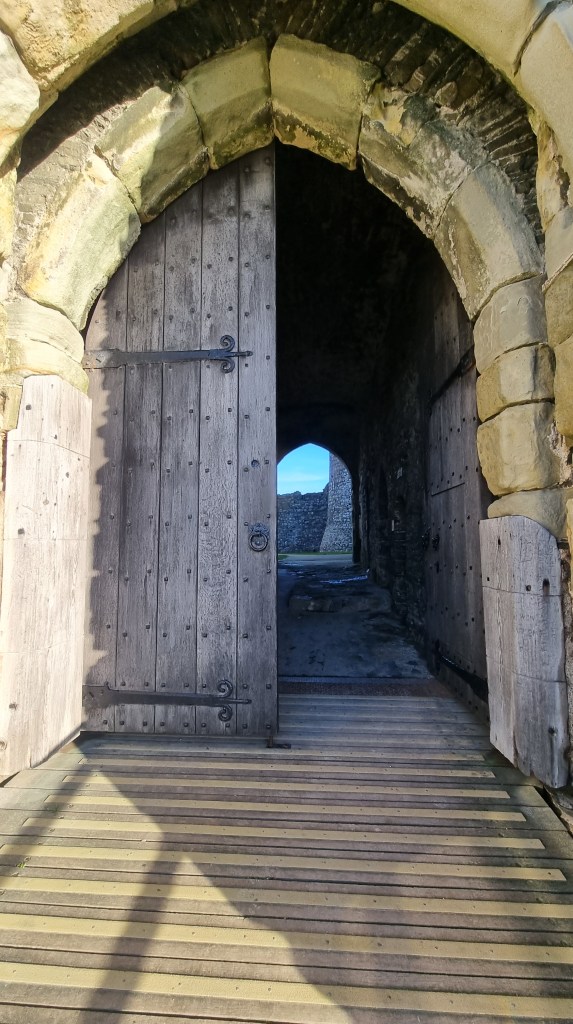
Then we get our first glimpse of the outer ward and you’ll see the large stone towers dominating the view point before we ascend upstairs of the gatehouse to the many different rooms of the building. The great gatehouse as its known took at least a century to build and was unfinished at the time of the Welsh siege in 1403. It was not until 1422 that the building finally received its lead roof, the gate passage has a tower on either side with basements that would have provided functions for store rooms as the doors only secured themselves from the draw bars on the outside only.
The ground floors rooms at the front would have more than likely been porter and guard rooms. But up on this first floor, and over the gate passage inside these tower rooms there was a massive hall, still being on a grand scale despite having to accommodate the inner portcullis and murder hole for the entrance. It’s also suggested that the other rooms here could have been private apartments for the owner or the constable of the castle which would have been on the second floor above the hall. The constable would have looked after the king’s taxes and keep order in the castle.

One of our favourite parts of the castle was the ability to see over the estuary and out over the town and the river, on a day like today, its picture perfect, but you can put yourself in the position of the people that would have been protecting and patrolling the ruins, they would be able to see for miles and had many different vantage points over unwanted enemies without putting themselves into too much danger.
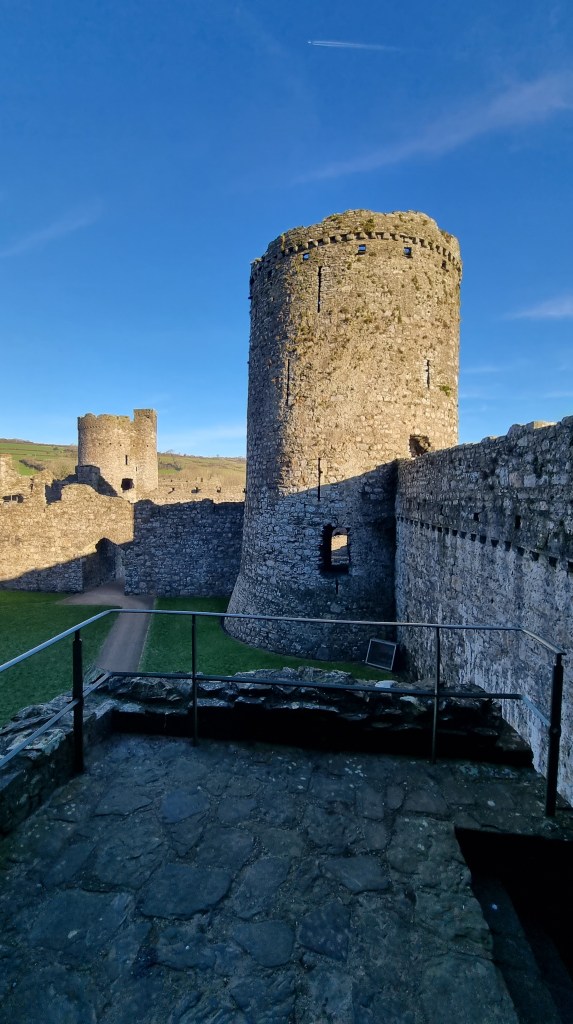
We get to experience life inside the castle, the main beating heart of the fortress, named the inner ward, this inner ward consisted of private apartments just for the lords, a grand great hall used for the all-important wine and dining and kitchens to make sure they really did live and eat like kings. The castle’s square inner ward was the first phase of building work carried out by the Chaworth family. It has a circular tower at each corner and is thought to have been completed by 1283, when the king stayed for several days. The existing hall and chapel were built slightly later than the original internal buildings, but about which is not well known.
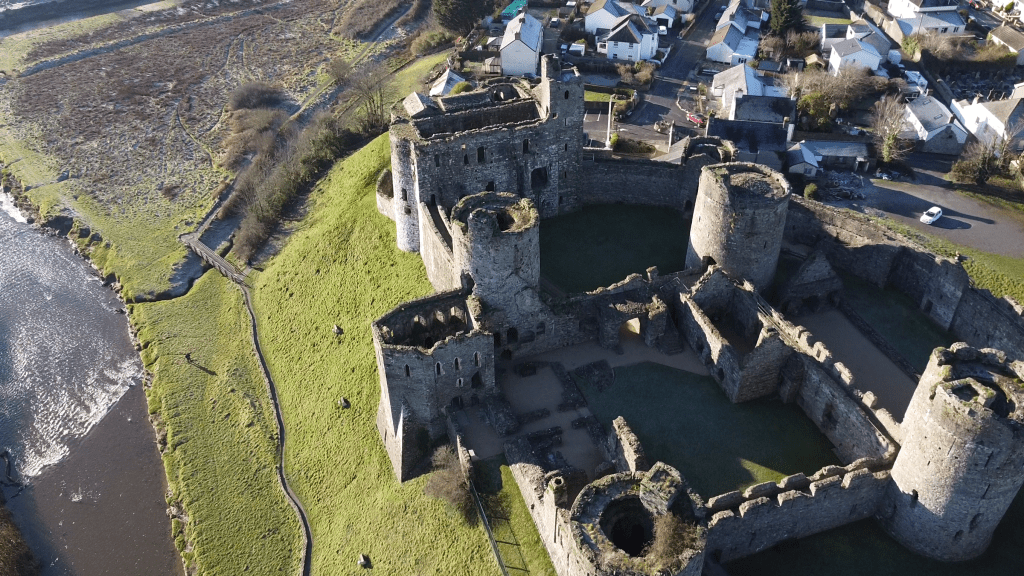
There really is so much to see, explore and experience here and climbing the towers is one of them, the crumbling staircases lead you up the north east tower ready for a wall walk overlooking the inner and outer ward from all angles, what I love about the wall walks are the ability to be able to see everything all from a glimpse, back in the day I’m very much sure this came in handy if you wanted to know what was going on or perhaps listen to the gossip of the castle. The north east tower was known as the lords tower because of course it was were he and his family had their private apartments and latrines and it was closely accessible to the hall and the chapel. This tower is fully still in tact and you can make your way right up to the battlements for the incredible, and I mean incredible views of the valley and the town. Not to mention a complete overview of the castle.

There are still so many rooms to visit and take in, and we explore the later kitchen just before we leave with it’s huge fireplaces at either end, this place sure was grand back in its day, and it has so much left to show off, including the town itself. When visiting here it remains a mystery why this place isn’t ransacked with tourists queuing up to get in, but honestly, when you do ,you can normally have the place to yourselves and you can explore at your own pace. I would say that this has to be up there with becoming a favourite castle of mine, the more and more I explored the more I was impressed and the more I fell in love with it and I really think you would too if you came here.
If you liked the blog please hit that like button, watch the full video below and consider subscribing if you haven’t already.
Till Next Time!
 Pinned on Places
Leave a comment