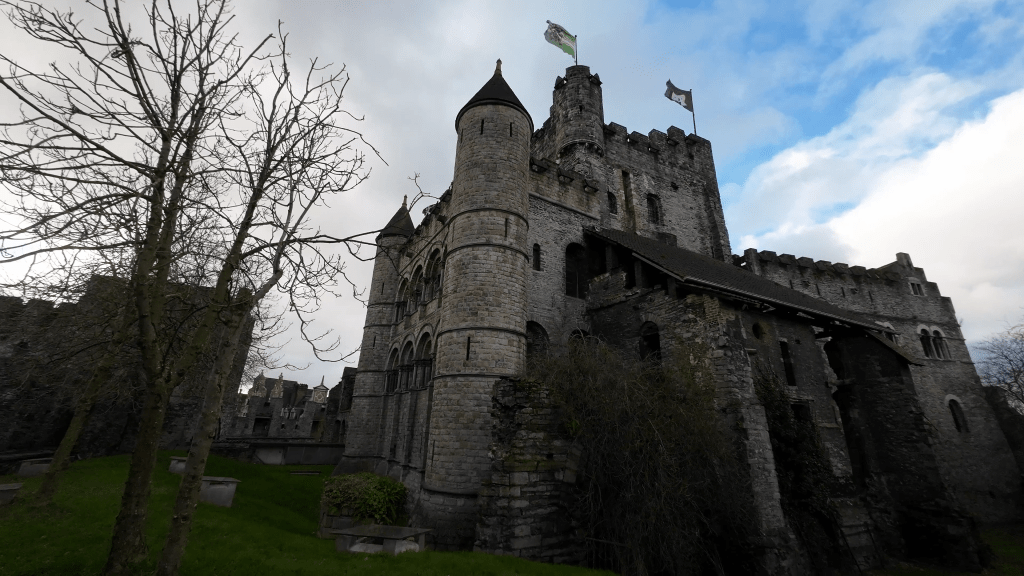
The historic region of Flanders in Belgium is famous for its many medieval monuments and buildings, to which these relics date back to an era when the region was a major economic and political centre under the Counts of Flanders, hence the Castles name translates to “Castle of the Counts” in Dutch. For many years Gravensteen, a massive Gothic castle, was at the heart of the region. Today, this restored fortress is one of the most famous historic sites in the entire region and worth your visit.
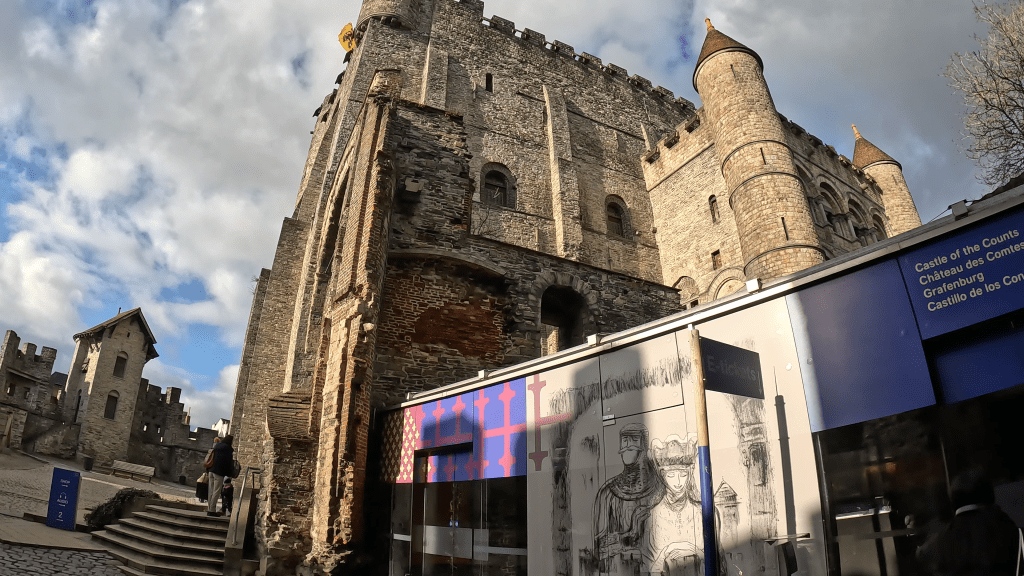
The story of Gravensteen begins in the 9th century, where Baldwin I, also known as Baldwin Iron Arm, builds a wooden fortress on the site of the current castle, constructed to defend the area from the threat of Norsemen. The castle, over the next two centuries, saw a massive overhaul in it’s infrastructure, turning a simple wooden castle into the fortress you see today, complete with three stories of stone staircases, lavish halls and improved living quarters.
Fast forwarding to 1180, the keep was again altered, this time by Philip of Alsace, the Count of Flanders. It’s final design was inspired by crusader castles that Count Philip had encountered during the Second Crusade, particularly in what is now Israel and Lebanon. It was further extended to include an extension to the gatehouse which connected the outlining curtain wall with towers to present a formidable structure guarding the city of Ghent.
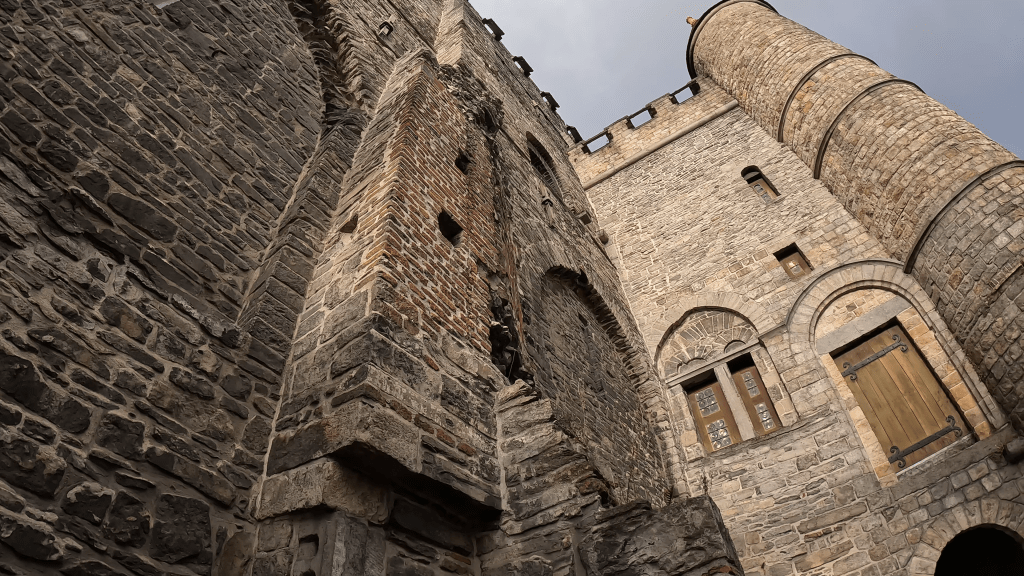
Inside the rooms have been restored, but mostly not over decorated. There are plaques with numbers and descriptions as you walk through the various rooms that complete the tour. The black lion on a yellow background, the count’s coat of arms, is on flags and shields around the place. Apparently the structure and shape we see today is still the one from then, though through the lens of the late 1800’s restoration team, which is probably why it looks so cool.
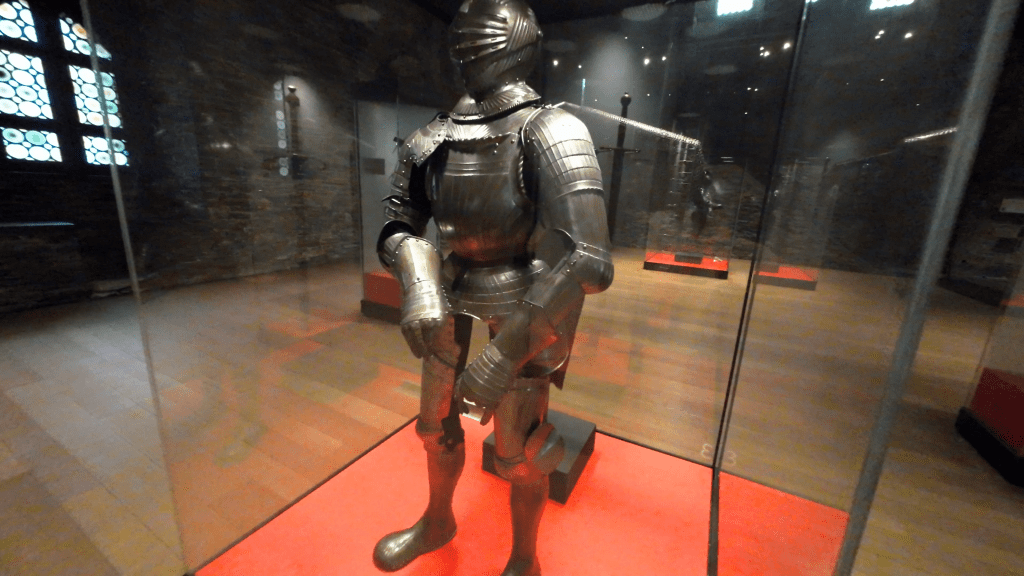
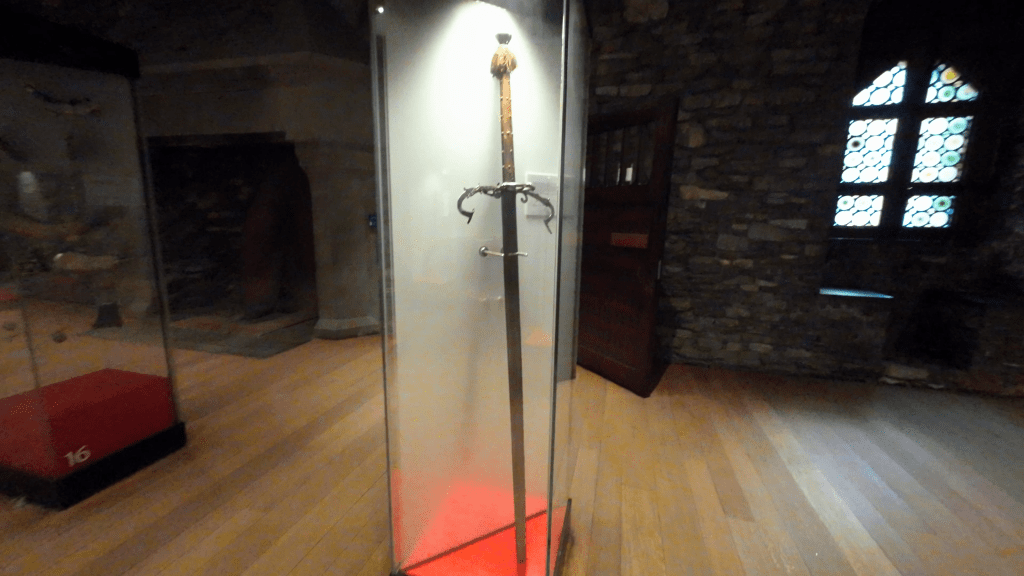
One interesting part of the castle for me was the armoury room. Glass cases are all scattered the room with examples and pieces of weapons from several time periods through which the castle was manned. This range’s from maces and flails to swords and pikes, with some examples of early firearms at the far end. One of the more interesting swords was the 2-handed ‘Zweihander’ from the late 1500’s/early 1600’s, it’s truly impressive how large and menacing these weapons are but incredible that we can see what armour and weapons that would have been used.
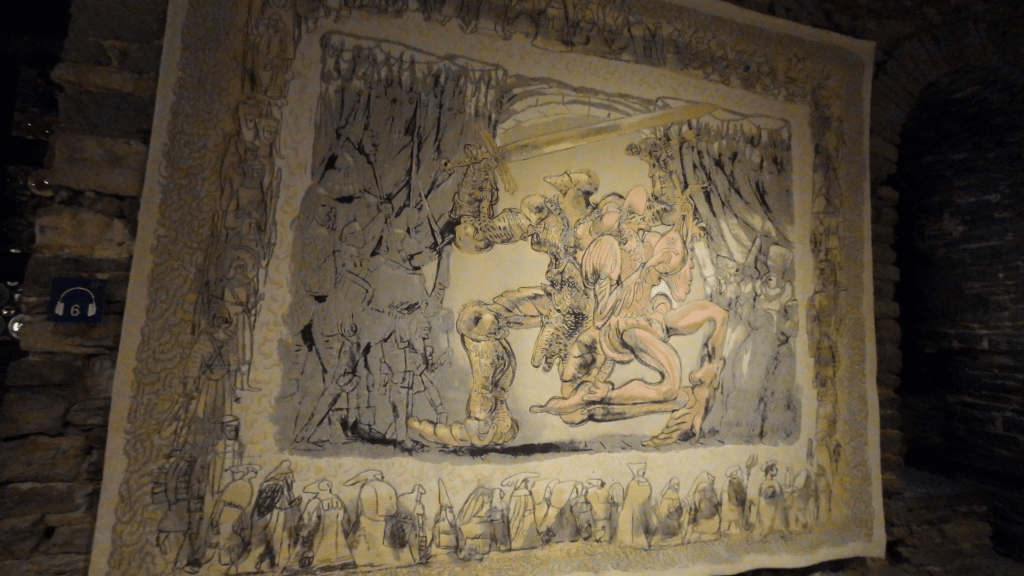
From 1180 to the 1350s the castle was the official residence of the Counts of Flanders, who lived in great opulence and luxury. When the Counts moved to a new residence in the late 14th century, the castle remained an important military site and was also used as a prison by the Council of Flanders. After the counts had relocated, Gravensteen was known as a barbaric torture chamber, the castle was used as a courthouse, a prison and a site for executions for over 400 years from the late 15th century right up to the 1820’s.
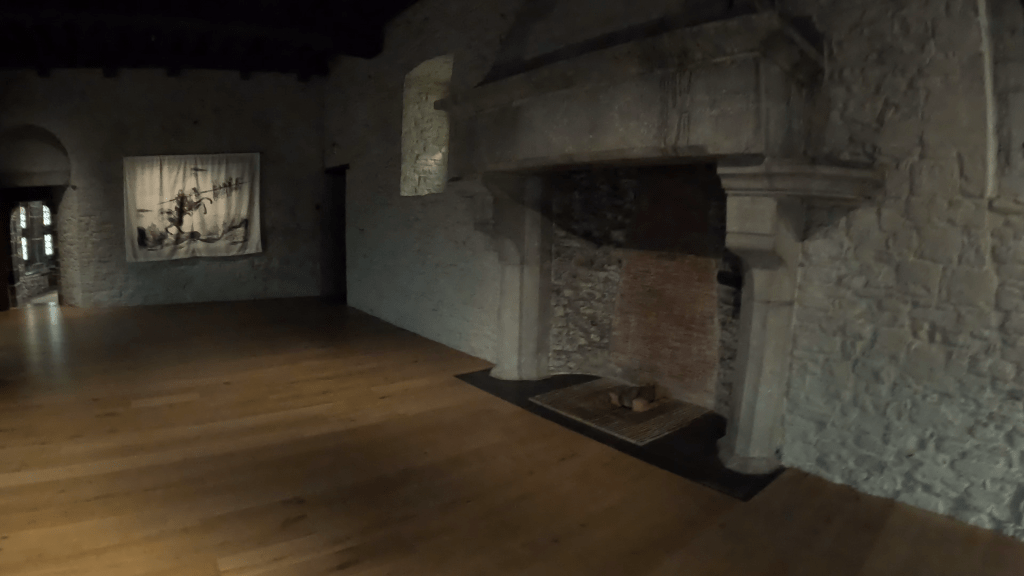
Unfortunately the castle has quite a sinister history with torture within its walls during the Middle Ages, during this time the lower levels of Gravensteen contained dank dungeons where the prisoners would be interrogated and executed inside the fortress. Captives suffered gruesome torments even by the standards of the middle Ages. The rooms for the torture chambers were designed exactly for that and used to extract confessions or just punish the prisoners of the castle. Some of the devices that were used are normally on display inside one of the rooms, unfortunately on our visit we weren’t able to visit these as they had a tour already there, but normally you are able to see some of the demonic contraptions on display in their exhibition.
Some of the displays show you an iron maiden, a stretching rack and thumb screws, all designed for the same reason. People who were mentally ill were also subjected to horrendous abuses, such as having a pear-shaped wooden ball placed in their mouth, secured with a rope around their head, to prevent them from making noise. Thumb screws were also used as an efficient way to enforce a confession; they were mainly used in witch trials. The thumbs would be clenched together, tightened with screws and then blocked by a padlock. Prisoners at the time might have also been mutilated, blinded or even buried and eaten alive.
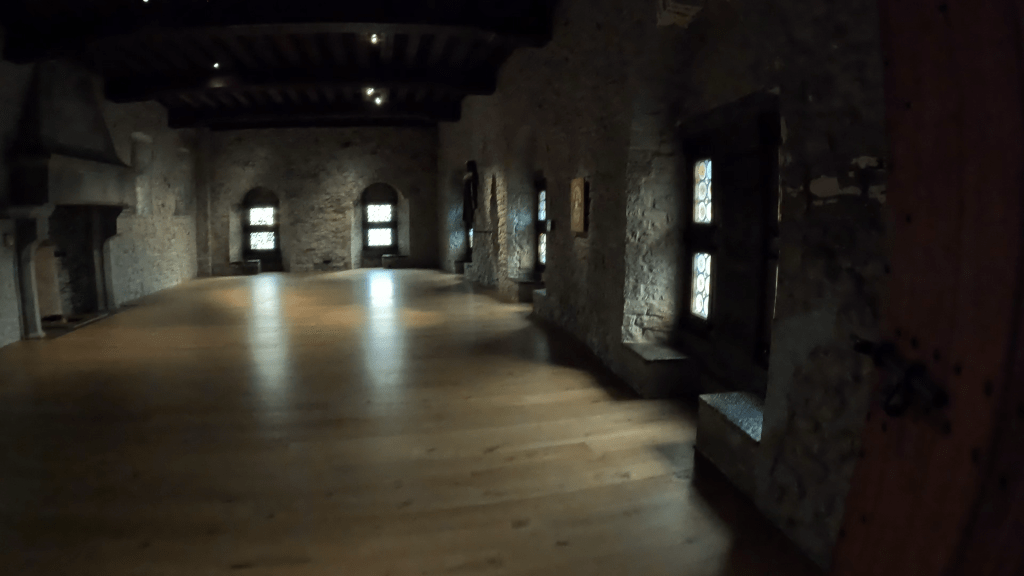
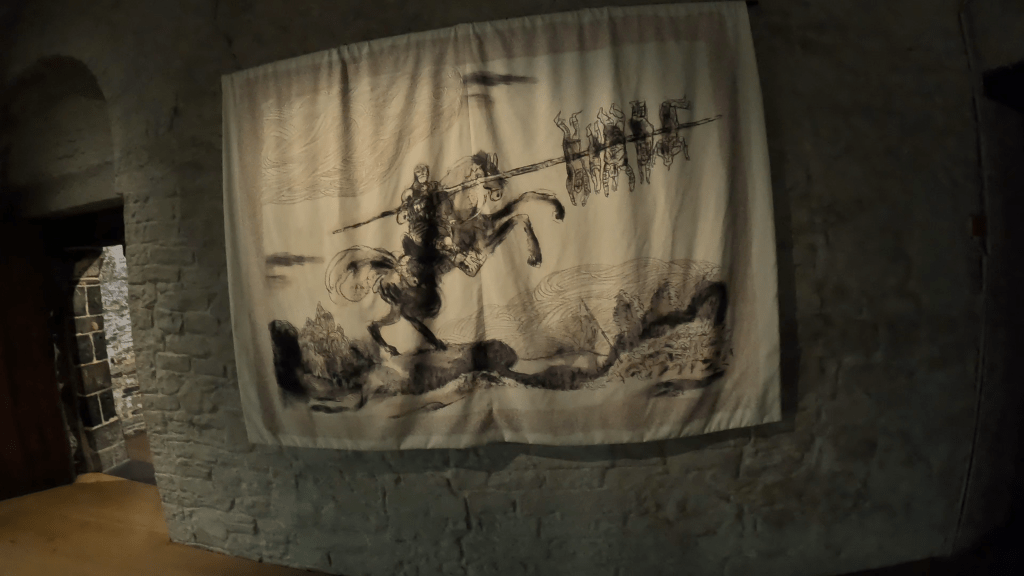
Executions occurred in the castle courtyard on a platform called the Wheat Market, for the soulless corpses to then be displayed at the nearby tower called Geerard de Duivelsteen. Even though it’s so hard to imagine just how these poor people would have felt, being dealt such bad luck, its fascinating to have such an insight into the disturbing medieval justice systems and punishment that once existed.
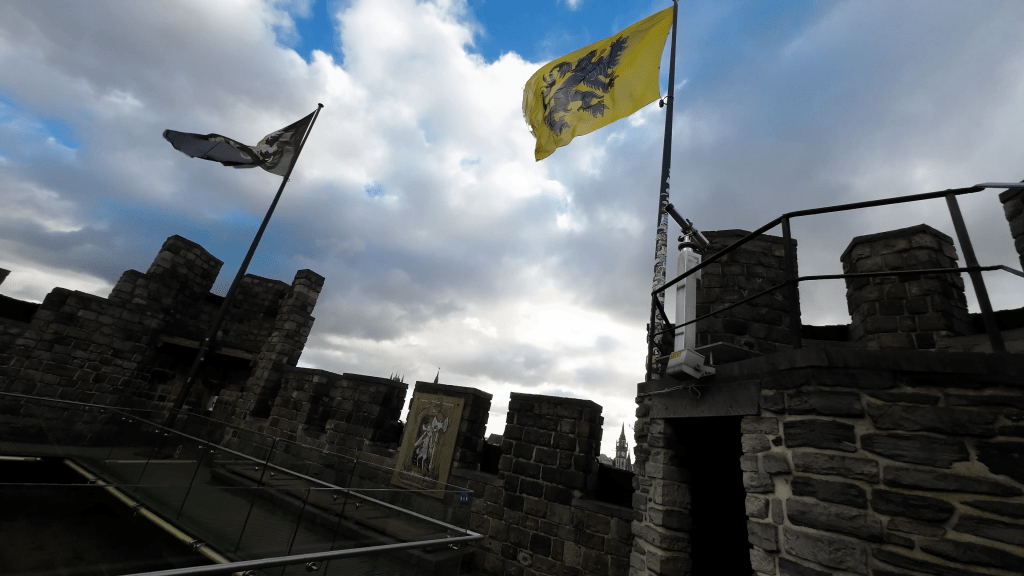
When the city of Ghent took over Gravensteen it initially became the municipal mint. In the 1820s, the city took control of Gravensteen from the national government and used it for various civic purposes. From the 1840s to 1880s, it became a cotton factory run by the Liebaert family who installed machinery in the castle. After the city reacquired it in 1887, restoration work began to return Gravensteen to its original medieval glory and then from 1953, the fully restored castle was opened as a museum to focus on daily medieval life.
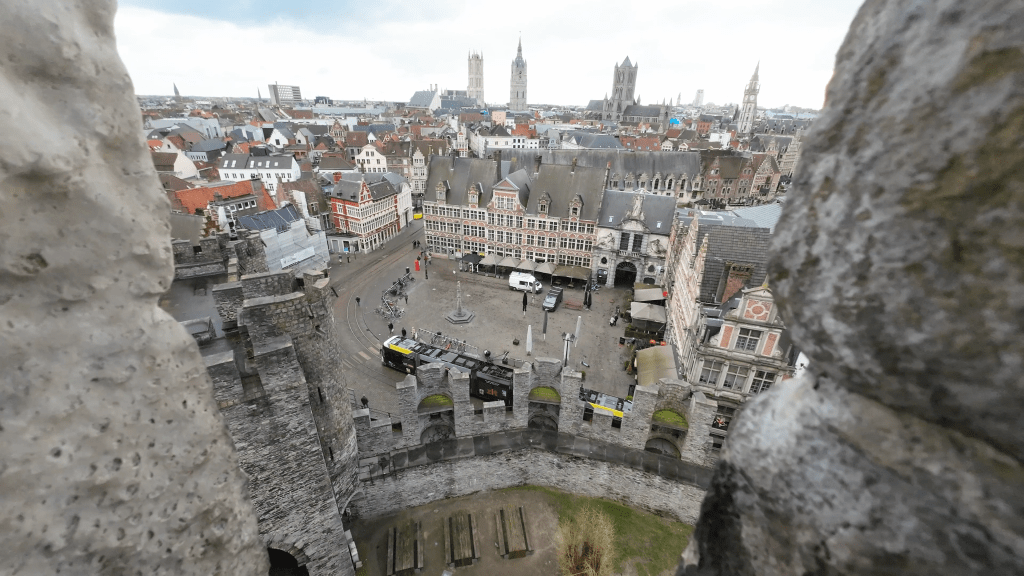
An interesting and quite unusual fact about the castle, on November 16th of 1949, 138 students from the university of Ghent took over the castle to protest an increase in the price of beer and the upcoming beer tax. They took the castle by siege, stormed the castle, closing the portcullis and barricading the gates before capturing the guard left in the castle and locking him away. The students headed to the battlements before throwing banners of slogans and chanting whilst also throwing rotten fruit and smoke bombs down at the police and fire brigade.
The fire brigade turned their hoses on the students to calm them down before both the fire brigade and policemen managed to charge at the students, but despite this, those students still won the siege. The publics opinions were on the side of the students and none of them were actually prosecuted and they essentially got what they asked for. To this day, each year it’s commemorated with a parade and a song, to the people of Ghent, it’s the greatest student prank in its history, but an important one at that.
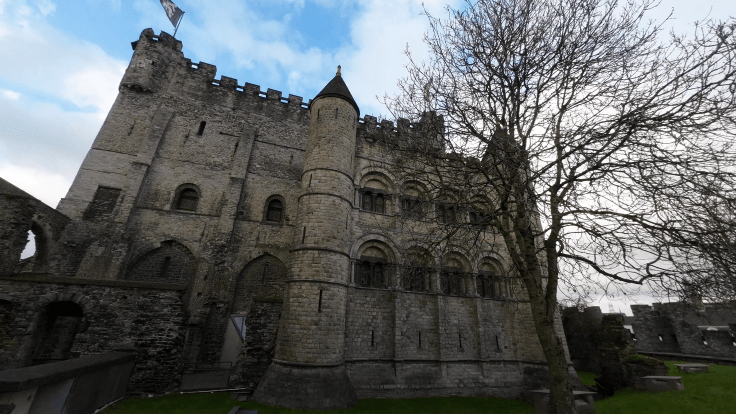
The arrangement of the castle all are centralised around a large ‘donjon’, a fortified tower keep, that was built within castles during the middle ages by European Nobility. There were also plenty of other important smaller buildings and a residence. The donjon and buildings inside are surrounded by an impressive fortified oval shaped battlement; of course the most iconic part of Gravensteen is the 24 small Bartizans that surrounded the walls.
A bartizan is an overhanging wall mounted turret that projects itself from the walls of late medieval and early modern fortifications. They were usually found at the corners and they enabled a warder to be able to see all of his surroundings and the bartizan would normally be furnished with arrow slits and supported by corbels.
Gravensteen Castle welcomes visitors daily from 10 am to 6 pm, with the last admission at 4:40 pm. It is closed on December 24, 25, and 31, as well as on January 1 and Residents of Ghent enjoy free entry every Sunday until 1 pm. This is also Free if you have the City Card Ghent pass, obtained just outside the castle in their information centre, other locations, or prices ranging from €8 to €13 euros based on age, disabilities or group sizes.
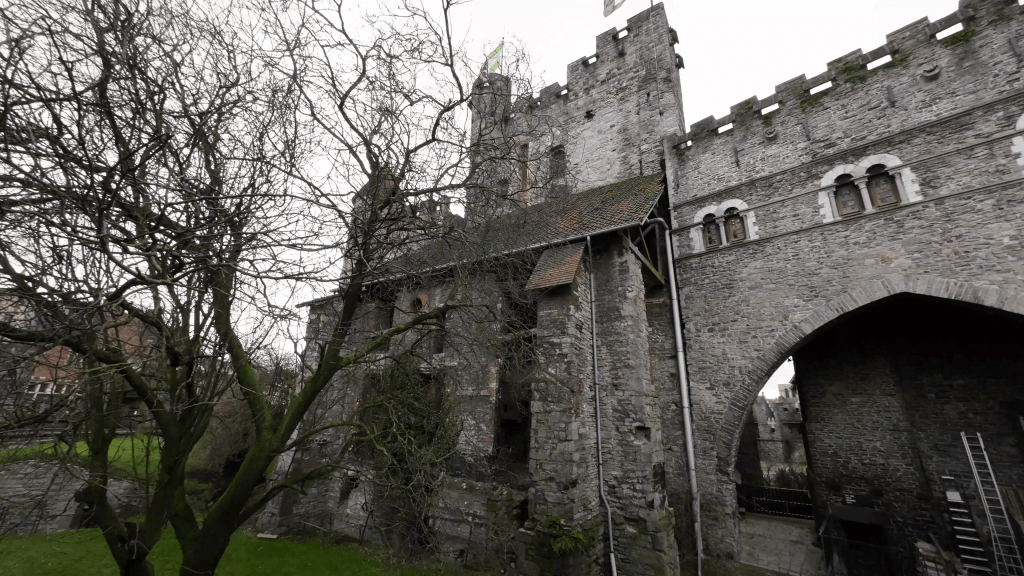
Gravensteen, from the outside to its inner just looks like a proper castle to me. It has an outer wall and a large central keep. There is a moat on one side and the jagged crenulations on every wall and tower. Gravensteen is an architectural gem and highlight and must do of any visit to Ghent. It provides beautiful scenery for photos and an unforgettable glimpse into medieval history and culture.
If you liked the blog please hit that like button, watch the full video below and consider subscribing if you haven’t already.
Till Next Time!
 Pinned on Places
Leave a comment