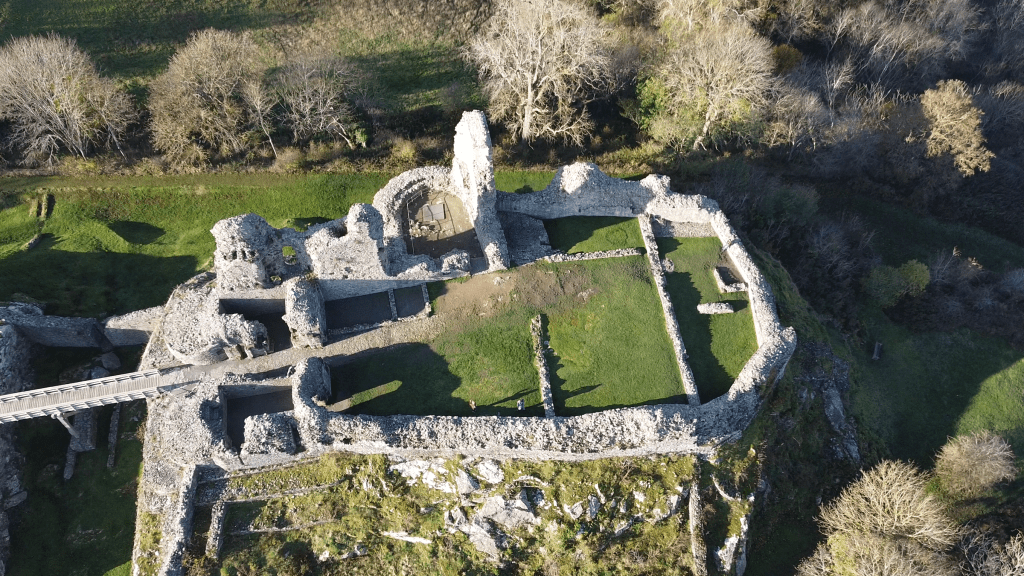
We decided to visit a castle that really peaked our interest, known for its location on a steep crag and it’s breath-taking views across the valleys, this place is truly something so wonderful to experience and one of mid Wales’ hidden secrets.
The stone built castle was often a key stronghold in the Welsh marches until the 1400s when the area declined into a period of political stability, but later during the English civil war, the castle was the host to one of the bloodiest battles in the history of Wales, the battle of Montgomery in 1644.
The first castle in Montgomery started in the years of 1071-1074, built by Roger de Montgomery whose name passed later to the Welsh town and castle, the stronghold that roger built became known as Hen Domen and was a motte and bailey wooden structure, located more north to this later stone castle.
After his death in 1094, Hen Domen passed into the hands of his descendants and then eventually became royal property, it was captured by Welsh forces and then burnt. However, the timber stronghold was then rebuilt after 1223 and remained in use until around the 1300s when it became useless as a result of Edwards 1sts campaign.
The stone castle we see today was built on the initiative of the English King Henry III, after its surrounding land was recaptured from Llywelyn. The builder of the new castle was Hubert de Burgh, earl of Kent who also worked on the construction of the three castles in Skenfrith, Grosmont and White Castle.
The work on the new castle took fiver years and consisted of an inner ward, two gatehouses, two d shaped towers and apartments all around the inner wards curtain wall. These renovations helped when in 1228 Prince Llywelyn tried to attack the castle, but was unsuccessful as the occupants of the time built a middle and outer ward for extra protection. Later in 1282 the castle garrison was part of the army that defeated Llewellyn and the battle of Orewin Bridge, it was after this battle that the castle diminished in its capacity as a military fortification and served more as a prison. The castle was again attacked in 1233 which resulted in damage to the Well Tower which had to be subsequently repaired and re-roofed.
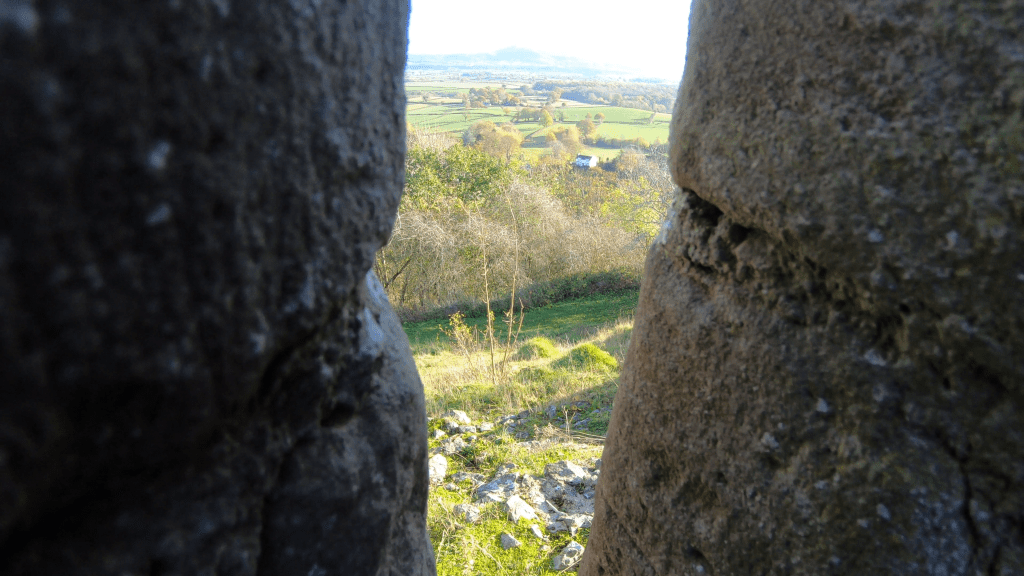
The walled town of Montgomery was attacked by the rebel forces of Owain Glyndŵr (Owain ap Gruffydd) in 1402 and was sacked and burned. However the stone castle fortress held out against the attack. Even though the garrison was not large, the thought out design of the castle and the men inside did their job defending and attacking. The town walls were not rebuilt and the town remained a ruin for two whole centuries. The town walls have now all but disappeared over the intervening centuries but now only the town ditch remains.
When the First English Civil War began in August 1642, Mid Wales was largely Royalist and the castle was held for Charles I and on the 1th8 September, a Royalist attempt to retake the castle was rejected in what was the biggest battle of the war in Wales and a major victory for Parliament. At the decisive Battle of Montgomery in 1644, the Parliamentarian forces overwhelmed the royalist infantry lines. The battle lasted only one hour, but around 500 royalists were killed, and parliamentarian forces imprisoned 1,500 royalists. The parliamentarians suffered 100 casualties, including Sir William Fairfax.
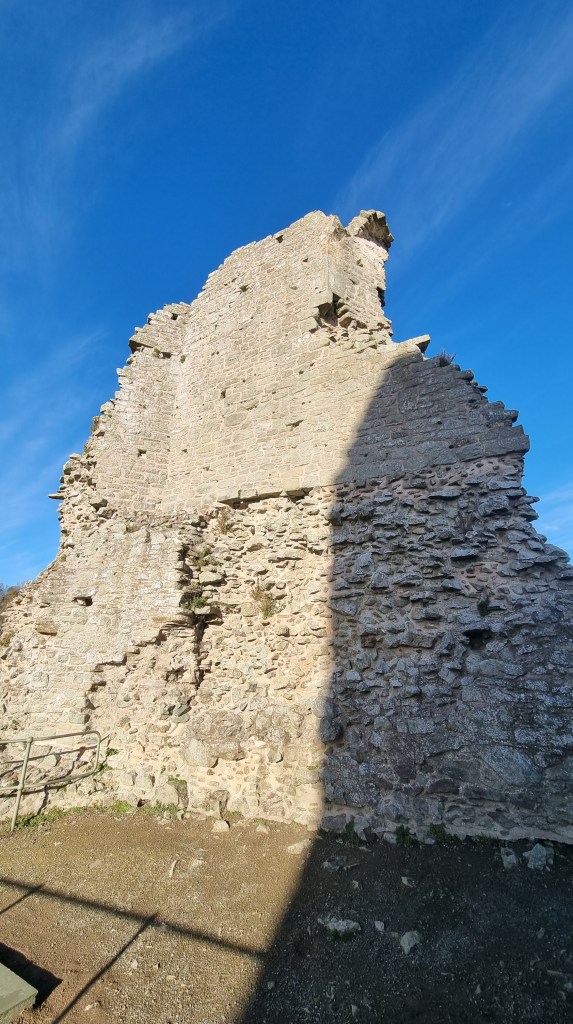
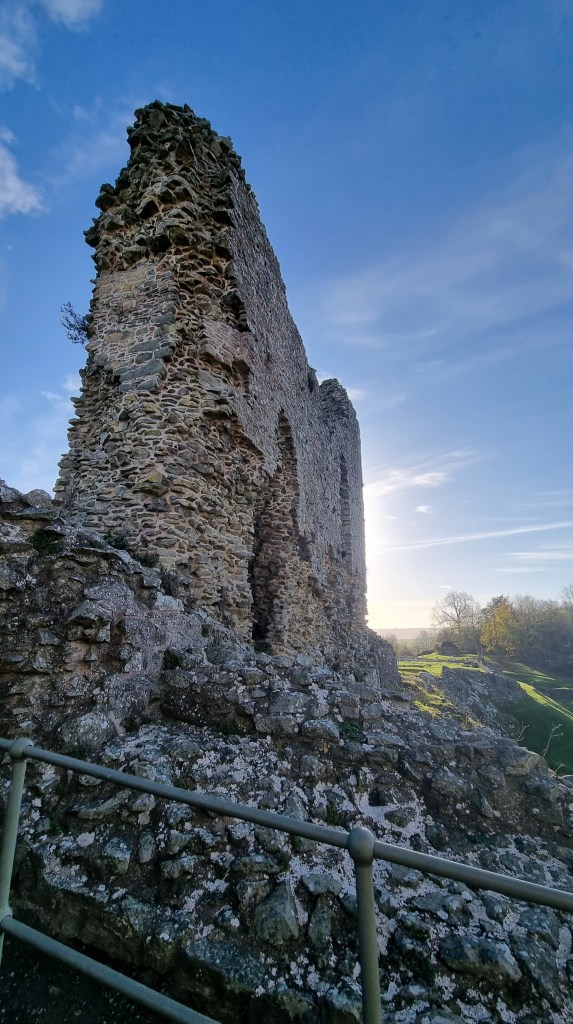
However, the new Parliamentarian governor Sir John Pryce, a Royalist defector, switched sides again in May 1645, then much of Wales rose again in the 1648 second English civil war and the castle walls were demolished by Parliament in June 1649, despite opposition from Richard Herbert, who succeeded his father in 1647. This policy was followed throughout England and Wales to prevent them being used again, reducing the number and cost of garrisons required. Richard Herbert was the last to use the castle as a residence and was buried at Montgomery in 1655.
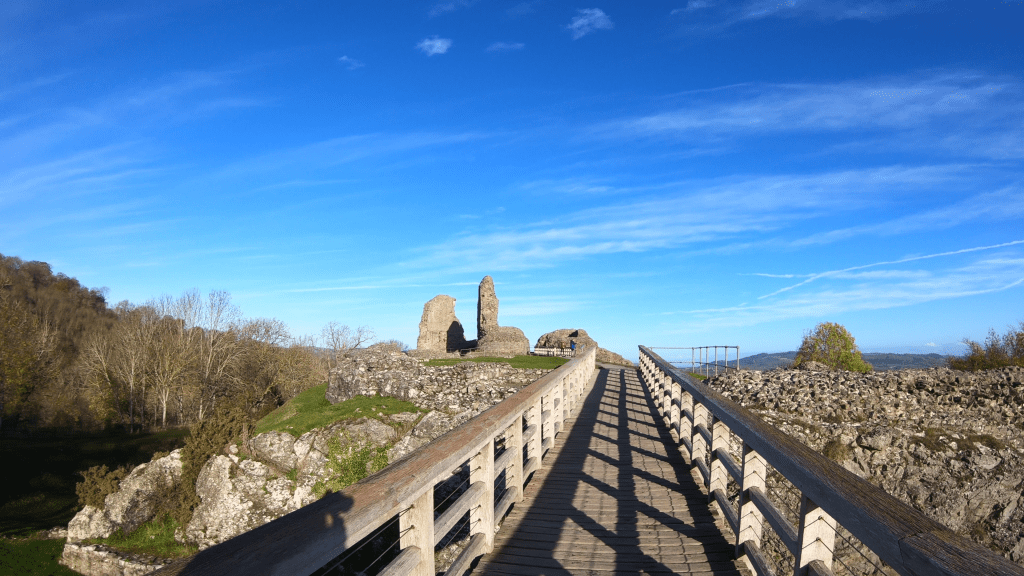
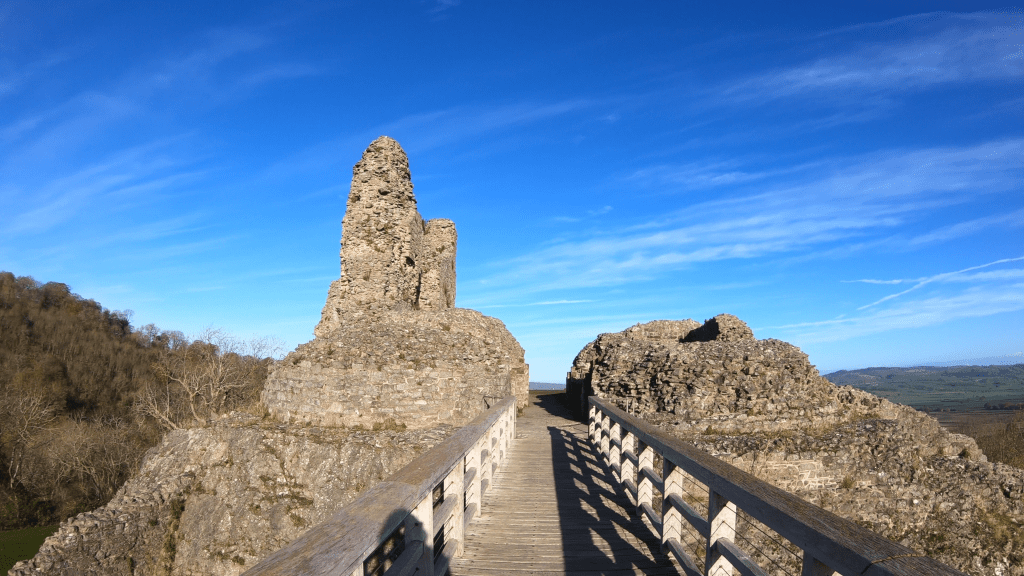
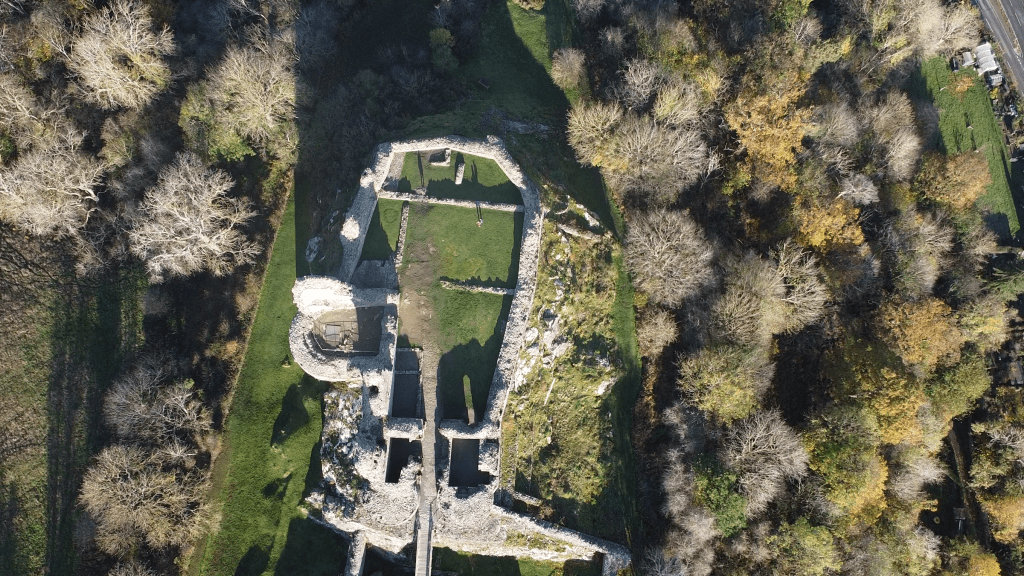
Walking over the once entrance to this incredible ruin, you begin to realise just how fortified this castle once was, it was protected on three sides by steep cliffs and crowded valleys, its only here that there is level ground, which was of course vulnerable to attack, but the main entrance further on was much more complex and heavily fortified, either side of us we are faced with two rock cut ditches before even getting close to the heart of the castle.
The two towers were built in the mid thirteenth century and the rest of the middle ward contained economic houses for the servants and the garrison. On the right hand side near the eastern curtain, a 14th century building was made, intended for drying grain after harvest. But the best part is being able to see on a good day all the way across the beautiful Welsh valleys, the views are incredible.
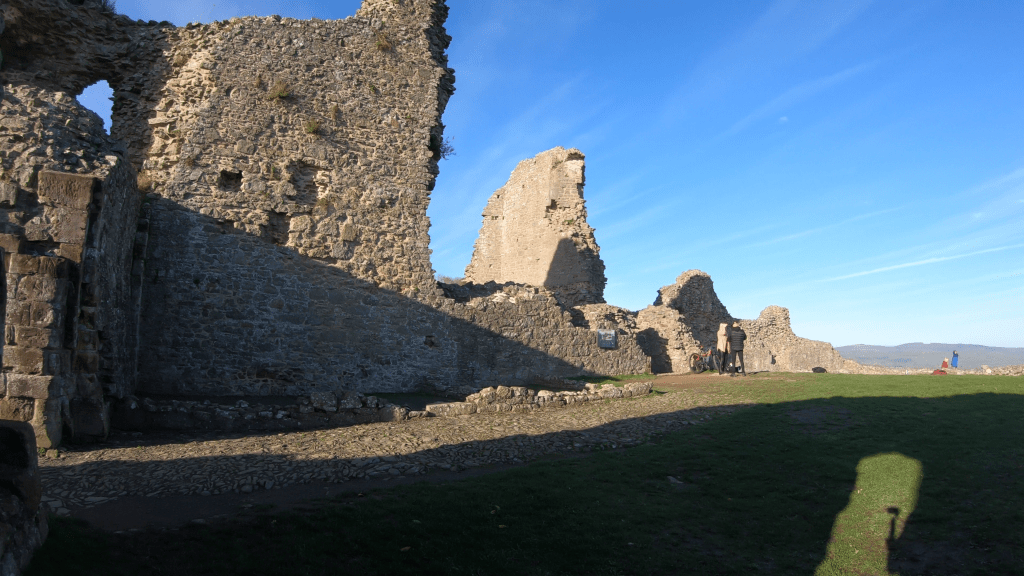
Inside, other important structures like the kitchen and a great hall that was fit for a king were originally built in wood, it was way more important for the strength of the defences to come first over the king’s comforts. The main apartments were in the large twin towered inner gatehouse, with a great chamber, private rooms and a chapel.
The gatehouse were in the shape of a horseshoe flanking a passage in-between them. The passage itself was around 2 metres wide and was defended by a mighty portcullis that was embedded in the grooves and had two doors, one at the beginning and one at the end of the passage. There was also a murder hole that allowed fire from above built in to it. The eastern rooms were intended for the castle guards and had an entrance portal from the side of the courtyard, this was closed with a door and a drawbar placed in the thickness of the wall.
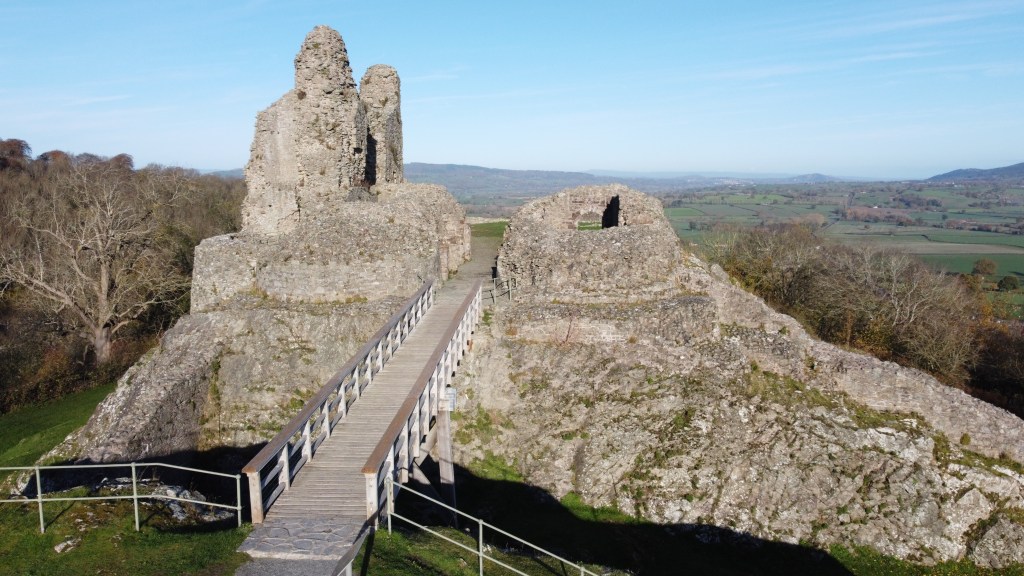
The all-important well was in the adjacent d shaped tower. And next to this was the kitchen and brewhouse, you are still able to see some of the remains of the massive round oven that is formed of thin stone plates at the edges. More than likely above here would have been were the chimney and brick dome would have been. Moving towards the views you walk down three shallow stairs to the brewery, to the east of the brewhouse you can look around for chutes that would have drained the waste and debris away from the castle down the sheer rock.
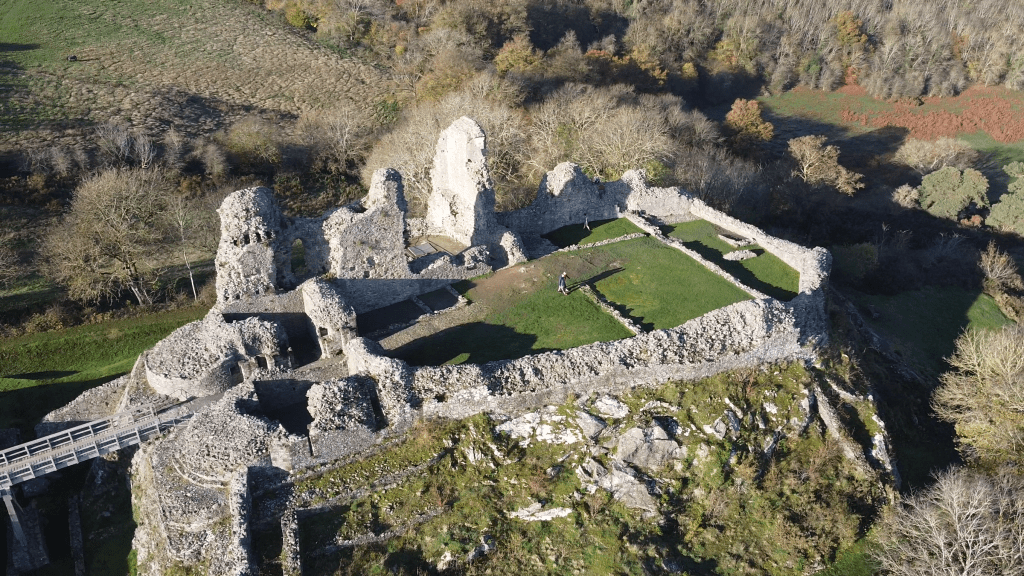
The castle certainly looks very dramatic, especially from below but also when you are wondering the site, it really reminded us of Carreg Cennen with how it dominates the hilltop and overlooks the town. The Views from the top are extensive, and the site is normally host to wedding, christening and family photoshoots.
The castle is free to enter, and approached from a short path to the south, free parking is available close by around a 5 minute walk or you can park in the quiet town and follow the steep road up from there.
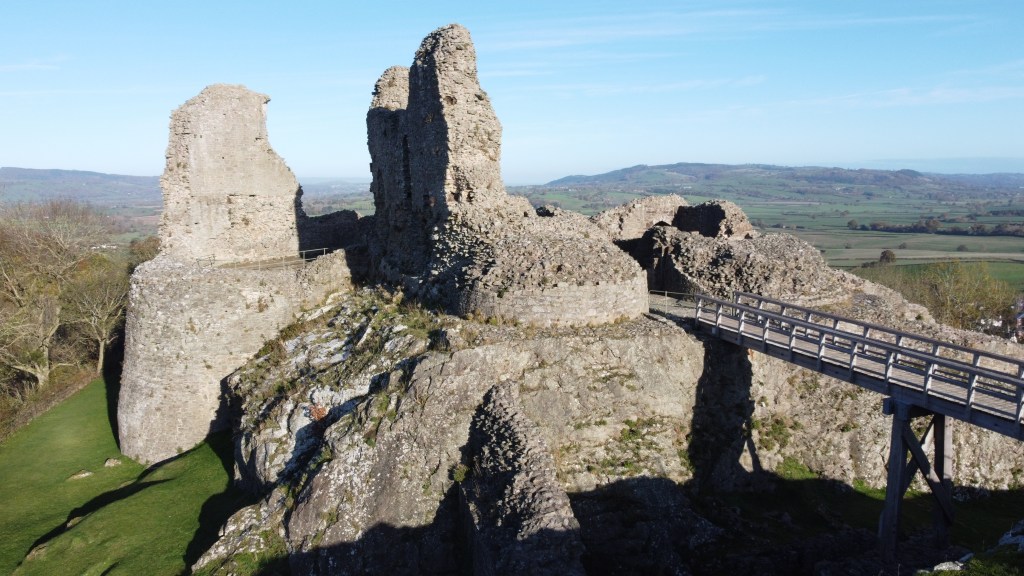
For us it’s been incredible to be able to tick off the pinned list, but we’d encourage you to take a visit whilst driving through mid Wales.
If you liked the blog please hit that like button, watch the full video below and consider subscribing if you haven’t already.
Till Next Time!
 Pinned on Places
Leave a comment