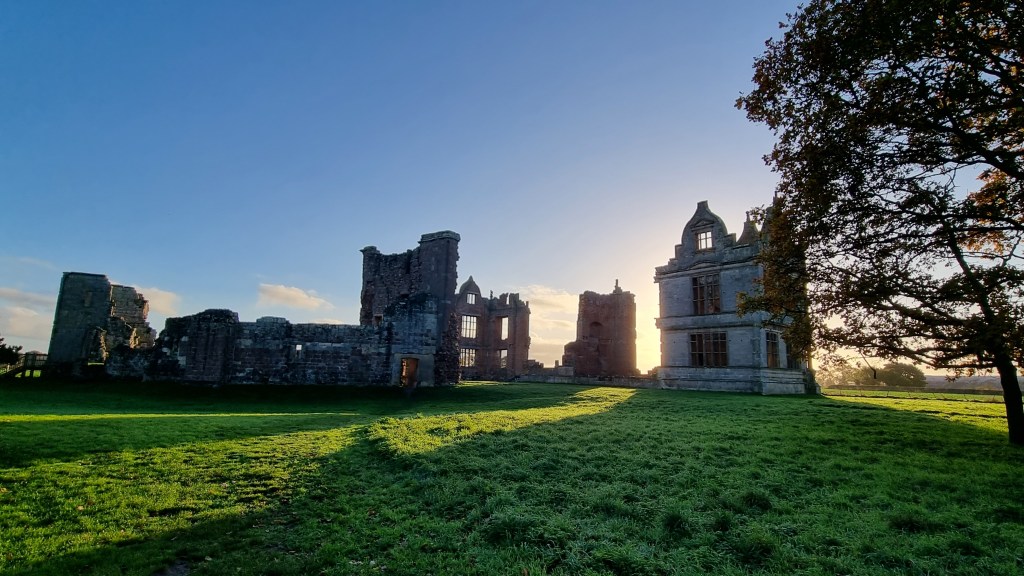
This time we head up north towards the impressive ruins of Moreton Corbet Castle, an architectural wonder of over 500 years of building. The earliest surviving remains are those of a stone castle begun around the 1200s, including a fine gatehouse. The castle is an English heritage property, unmanned and free to wander, near the village of Moreton Corbet in Shropshire England. The ruins are from two different eras, one being a medieval stronghold and the other being an Elizabethan era manor house. Sadly the buildings have been out of use since the 18th century.
We believe the story would have began in 1086, when two Anglo-Saxon landowners were living at Moreton, it’s likely they would have fortified the structure here and by the early 13th century they had been replaced by another Englishman named Toret. His descendant Peter, was lord of Moreton Corbet by 1166, and lived in the castle. Later in February of 1216 William Marshall stormed Moreton Castle on behalf of King John of England against Bartholomew Toret, at this time the castle was known as Moreton Toret castle, not long after the attack, Bartholomew died and Richard de Corbet, his son in law, inherited the castle and changed its name to Moreton Corbet.
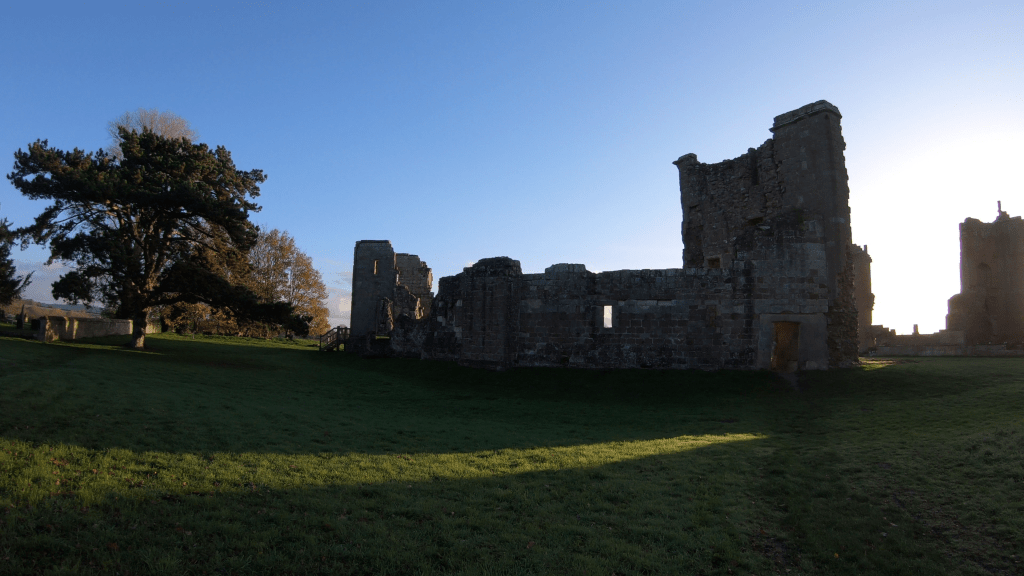
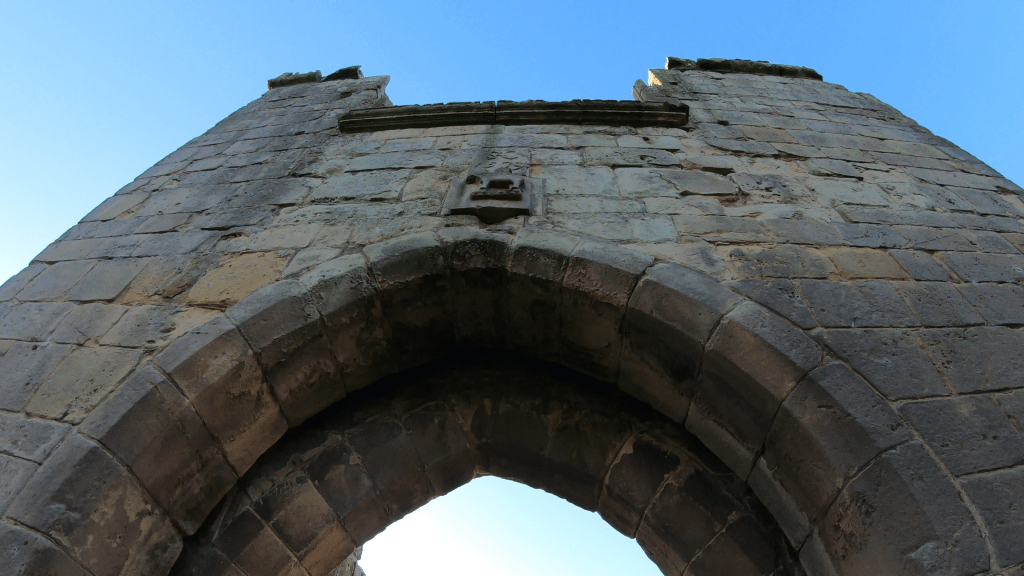
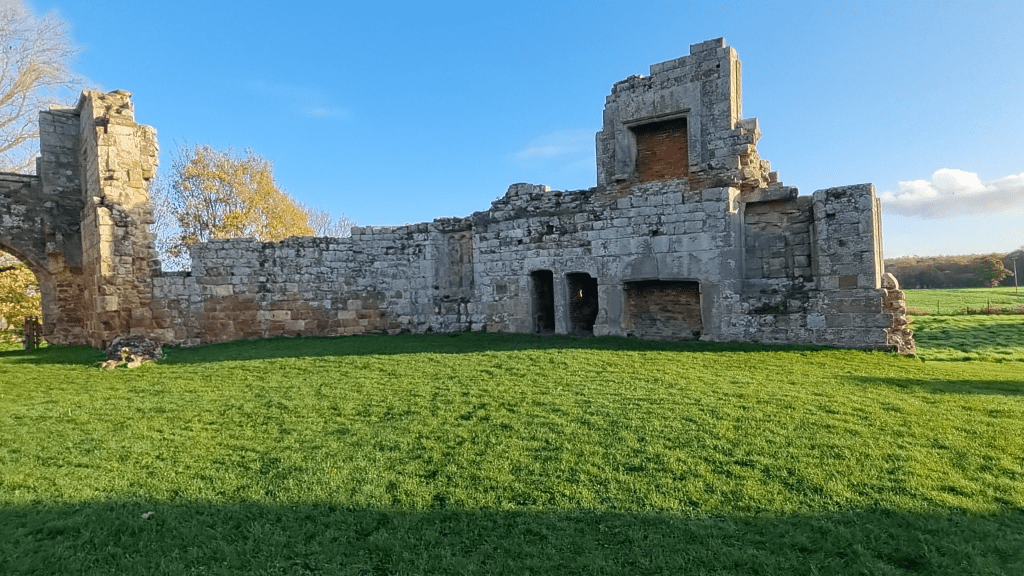
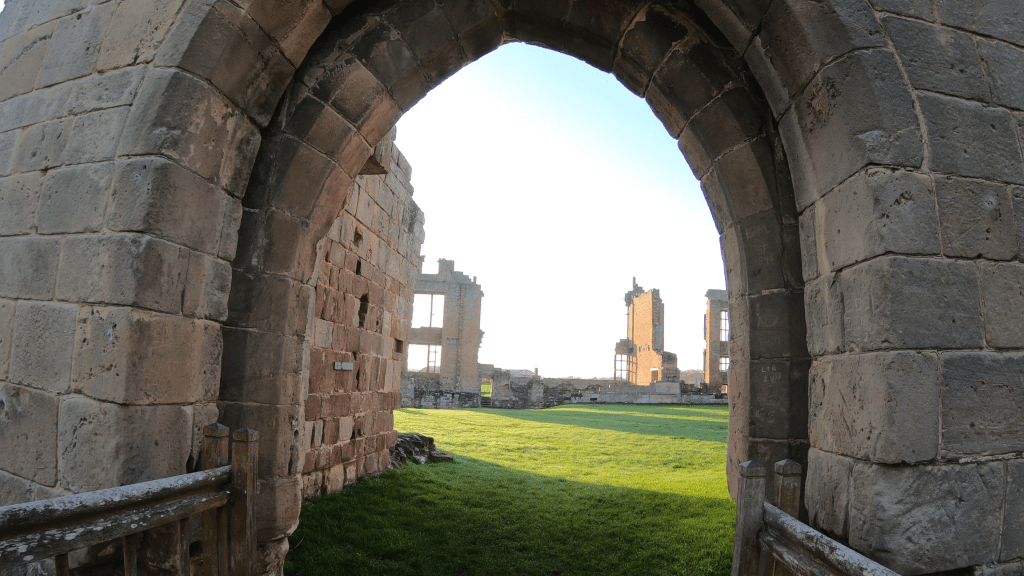
We entered the site by crossing a now very shallow ditch – once upon a time maybe a moat – and passed through the gatehouse as people have done since around the 1200s. Like many buildings that old, it has been modified. When Sir Robert Corbet inherited the castle, he completed the refurbishment of the castle, adding Sir Andrew’s monogram, SAC, which was carved above the gatehouse in 1579. There is also the Corbet family emblem of an elephant and castle just right above as we wander inside and worth looking out for. Although the gatehouse is ruinous and empty, it attached with the inner courtyard, it’s here that you get a first glimpse of the gorgeous ruins and see actually how big this castle would have been.

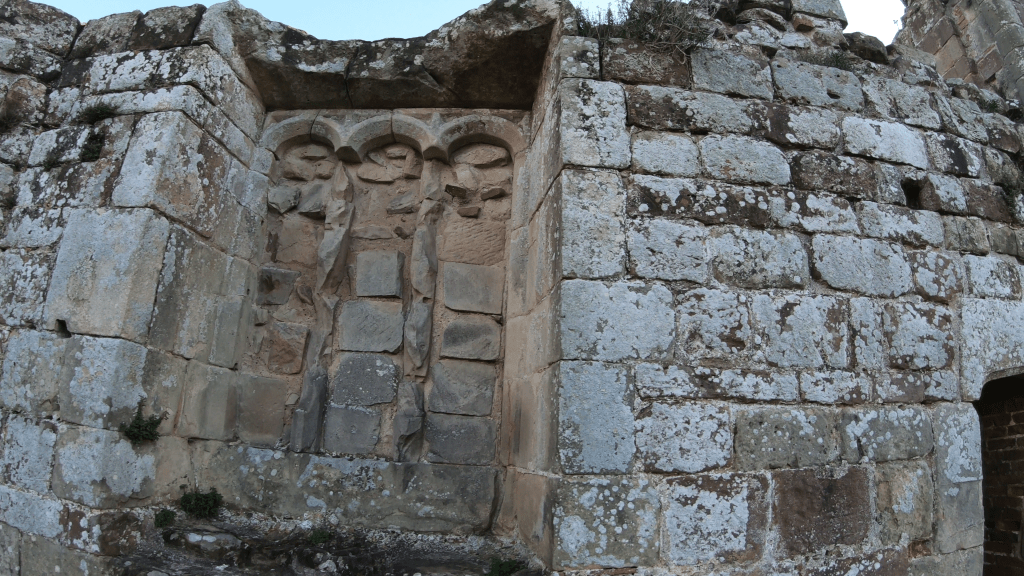
Sir Robert Corbet then set about building the new Elizabethan building – from elaborate plans he had brought back from Italy – and influenced by the classical architecture he had seen overseas in his role as a diplomat. Unfortunately, he died of the plague in 1583. After his death, his two brothers and successors, Richard and Vincent Corbet, carried on with the building of the new manor, but left what remained of the original fortification.
There was also a new range of buildings of the gatehouse which included a great hall with a substantial fireplace. We take a look inside what was once the openings to the latrines placed next to the range here, sadly a section of the range was dismantled when Robert decided he wanted it to look a certain way. What’s incredible to see are the large fireplaces, they really are impressively big and you can only imagine how much wood they would have to chop and burn to keep the buildings warm.

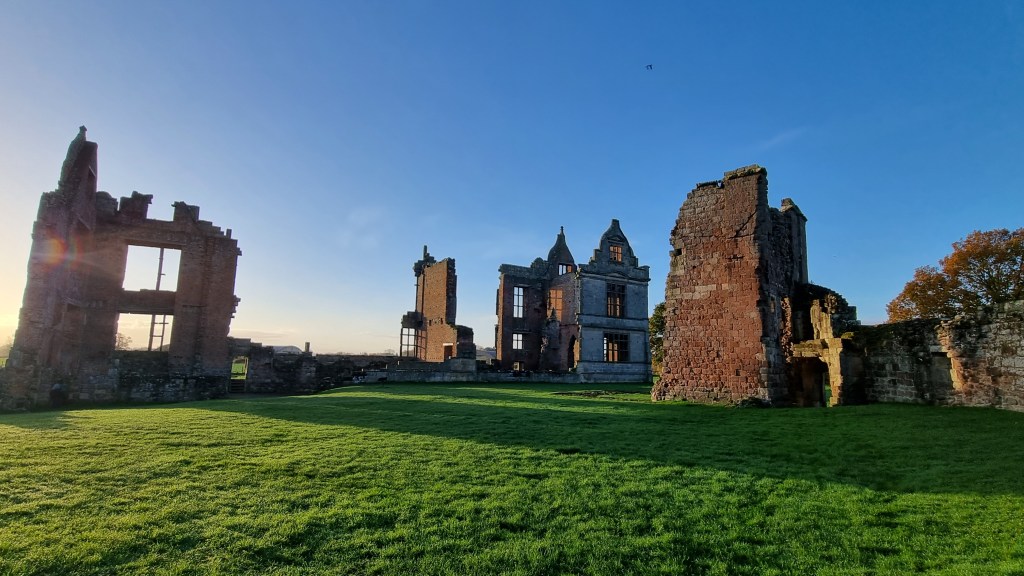
At this point we’re move onto seeing around the Elizabethan part of the castle. There’s not much left of the castle’s more modern part, although the outer wall appears quite substantial and the south front is lit by huge grid like windows. Inside this side was the great chamber and a long gallery, which overlooked a new garden that was created by Robert just besides the castle. In 1588, a survey had records of the garden with formal walkways and a central sundial with an orchard nearby, traces of the once garden are still faintly visible but only as earthworks in the neighbouring fields. Once upon a time, this would have been a really elegant home, with the Corbet family hosting lavish dinner parties for the rich and famous of the day.
My absolute favourite part here was exploring the outside of the mansion with it’s decadent and beautiful detailing. I love to see the different patterns and the many heraldic and renaissance detailing really showing off the wealth and passion that the Corbet’s had for their home. The views around the manor really are impressive, it’s so sad that Robert did not live to see his masterful vision come to life. As stunning as Moreton Corbet Castle would have been to Elizabethan eyes, the luxury did not last. During the Civil War of 1642, Sir Vincent sided with the king and Moreton Corbet Castle became the site of a number of sieges.


The house was protected a Royalist garrison and naturally it was attacked by the musket and canon fire of the Parliamentarians. There are signs of this in the curtain wall of the castle. The damage done during the Civil War years was extensive. The Corbet’s repaired the house and continued to live here, but fortunes changed and strange to imagine for us today the house was abandoned and left to decay in the 18th century.
800 years ago the air would have been ringing with different kinds of sounds. Castle life tended to be busy and noisy, perhaps a blacksmith at work, kitchen servants calling out to one another as they busily prepared food, and possibly some rich noblemen riding into the courtyard with their armour clinking and their horses tired after patrolling the lands. Corbet was influenced in his work by Italian design, but at that time few people travelled to Italy, so the design was accomplished solely with the aide of drawings of Italian villas. Hence, the classical Italian effect of Moreton Corbet is made up of random bits and pieces rather than a whole, but it is still a lovely building, though it stands today as an empty shell.
To understand why it is a shell, we must fast-forward a few decades, and hear the story of a curse that seems to have stood the test of time. In the early years of the 17th century, Puritans were persecuted in England. The owner of the castle, Sir Vincent Corbet, was himself not a Puritan, but he did sympathize with their dilemma, so he gave shelter to a Puritan neighbour named Paul Holmyard. However, Corbet became intimidated by his radical ethics and more than likely concerned for his own welfare should his aide be discovered so he asked Holmyard to leave. Holmyard, in the best style of traditional folk tales, cursed the Corbet family and vowed that work on the house would never be completed. Holmyard’s ghost is said to haunt the area, keeping watch to ensure that his curse is fulfilled. Whether it was the effect of the curse or the events that followed, the mansion was indeed never completed.
In the Civil War, Sir Vincent fortified the house on behalf of the king. Corbet had a force of over 100 men at his disposal, but he was undone when a small force of only 10 Parliamentarians tricked him into opening the gates one night, and Corbet had to surrender. The castle was burned by the Parliamentary soldiers, and though it was repaired, it was never completed, and eventually fell into decay, leaving it much as we see it today.


As we wrap up the visit, we see the remains of what was once the great tower, or the keep, which would have completely dominated the medieval castle back in its day, The first floor of the tower would have served purposed as a bedchamber for the lord of the castle and the rest of the ruins were later extensively remodelled by Sir Andrew Corbet when he decided a two storey range should and would be built. It contained a kitchen, with huge brick chimney stacks, a larder on the ground floor and then all accommodation with.
A visit here truly is worth it if you’re around Shropshire, there are also many other places to pin on the list, many which we have visited back if you want some inspiration have a look through our previous videos. But Moreton Corbet was a great experience and steeped in history.
If you liked the blog please hit that like button, watch the full video below and consider subscribing if you haven’t already.
Till Next Time!
 Pinned on Places
Leave a comment