
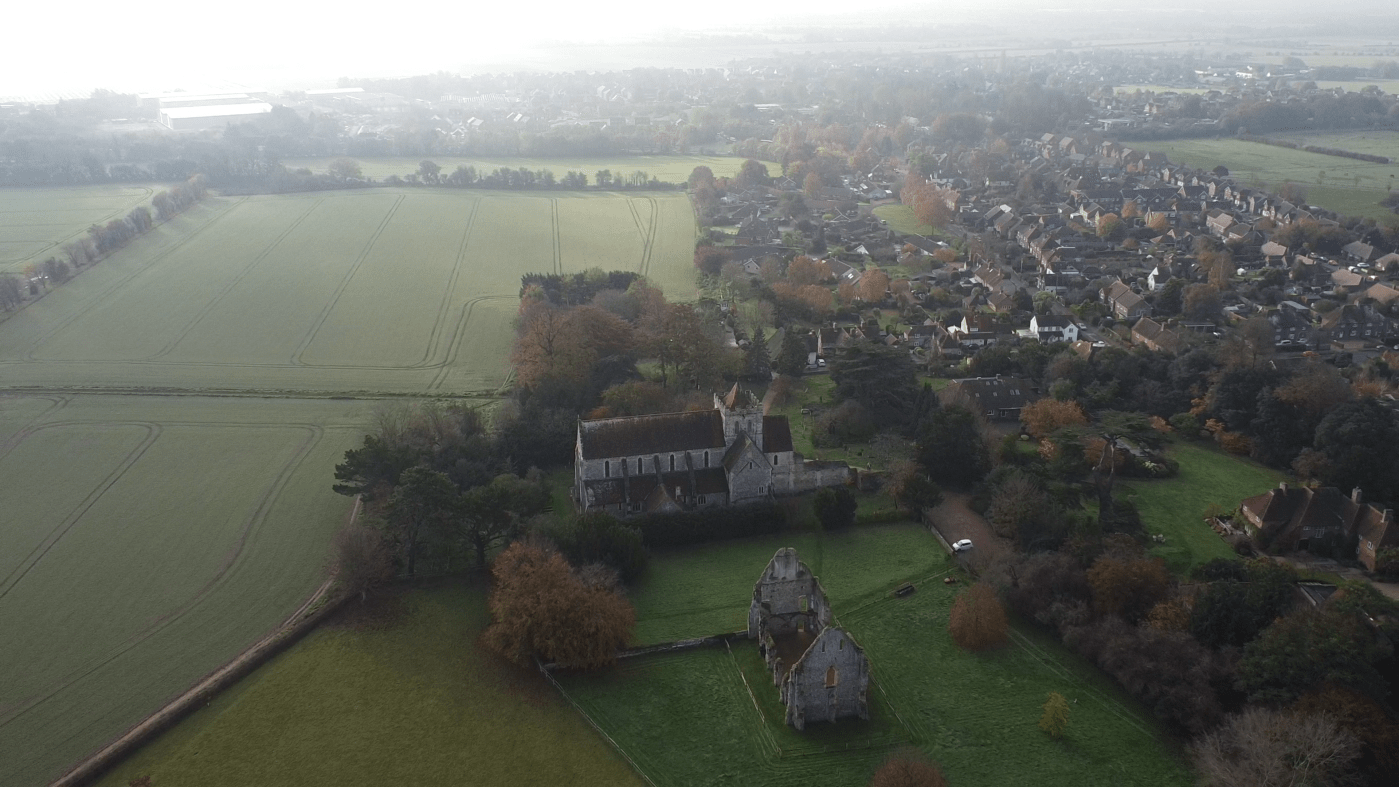
Hey everyone, welcome back to the channel and to another explore. This week we travelled down the road from our hometown and towards the remains of Boxgrove Priory, standing at the end of a gravel path in a stunning setting in the small quiet town of Boxgrove and at the foot of the South Downs. Join us as we wander an abandoned prior’s lodging house and a beautiful parish church full of stained glass and incredible architecture.
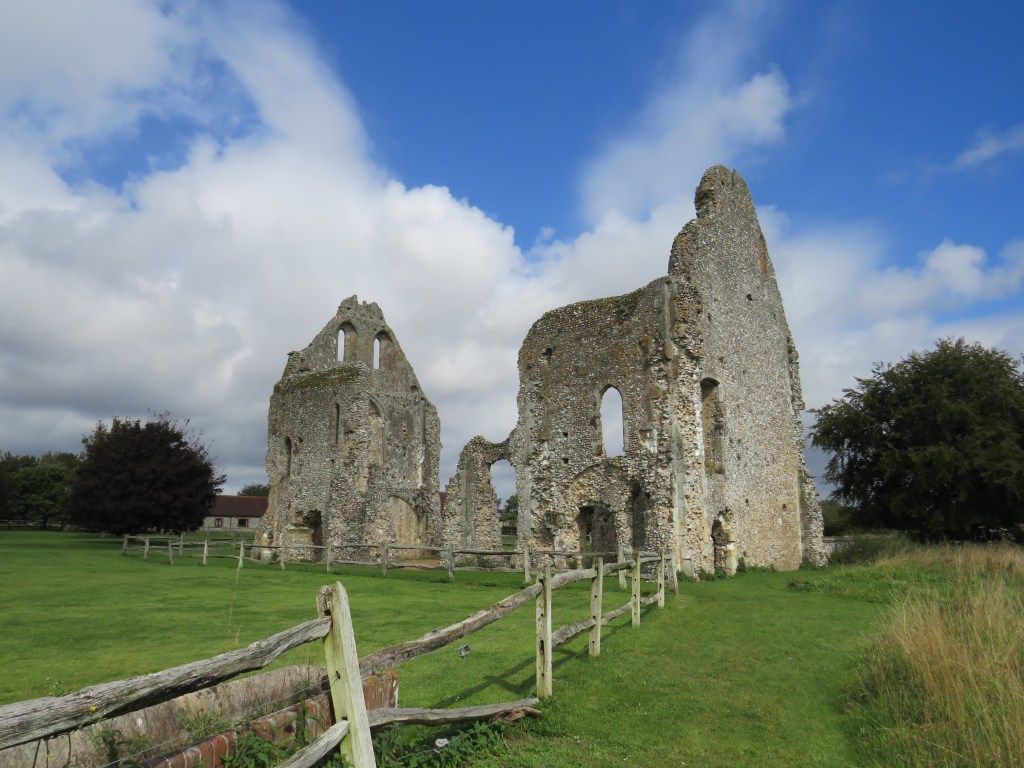
Finding the priory itself isn’t as easy as normal with English Heritage sites, only part of this site is maintained by them so the typical brown signage dotted before the sites arnt actually there, instead follow the white signs for Boxgrove and Priory. The first building you come across is the isolated ruined shell of the guesthouse, this roofless building is still impressive to look at and stands at two storeys high.
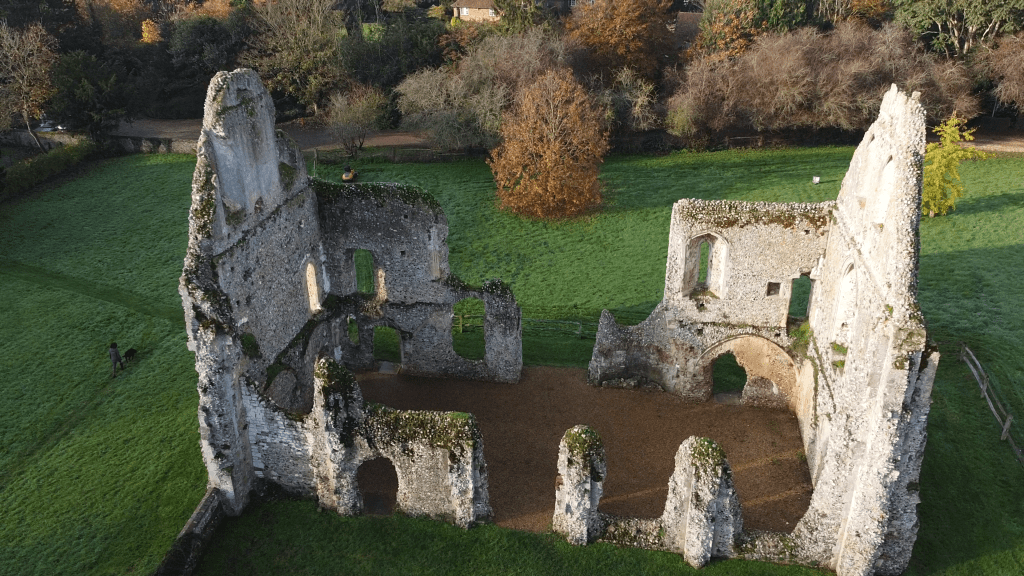
The guesthouse was founded in the early 12th century making it almost 1,000 years old and these ruins have stood the test of time and their stunning details despite being abandoned for almost five centuries. Interestingly the remains of the original priory building arnt to be seen, only places where the priory buildings were pulled down, you might be able to see straggling bits of columns and stray arches meant for support to a much larger building, but what remains now is only a part of the priory which now lives on as the parish church of Boxgrove.
An incredible historical discovery is said to have been founded here though, discovered in 1993 by archaeologist Mark Roberts, 500,000 year old human remains were found and excavated. These remains were dubbed Boxgrove man, an extinct relative of modern day human. Although only two teeth and two pieces of a shinbone were found it’s still thought to be the oldest human fossil discovered in the country. Not something you expect from a small town near Chichester.
Inside this guesthouse, eight priests, 28 servants and eight children lived in the priory. But the priory was were the prior would have entertained his guests and a shelter and home for those travelling who needed a lodging to stay in. The architecture here is still clear in its remains and the detail in the windows and archways are interesting to see and take in.
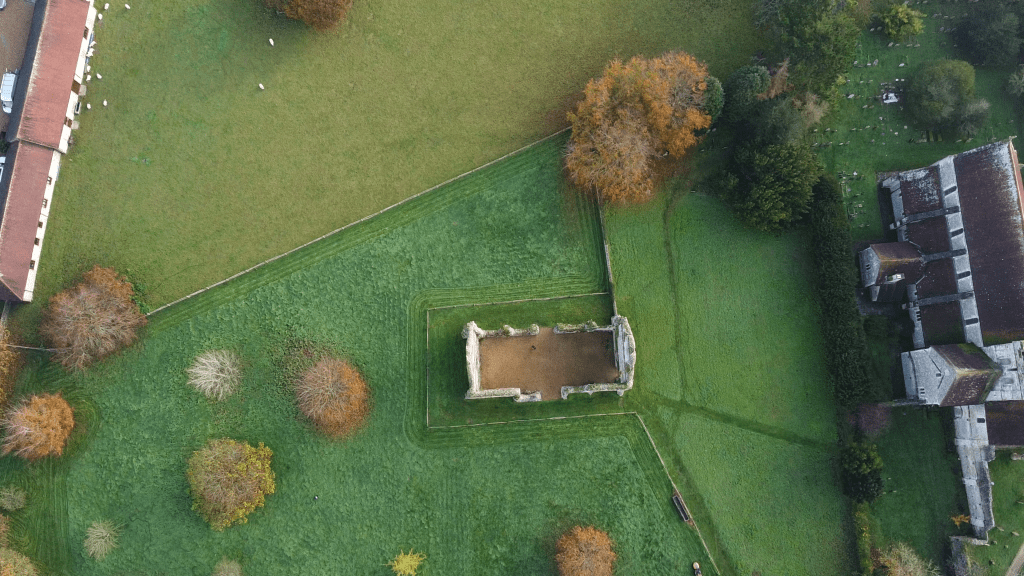
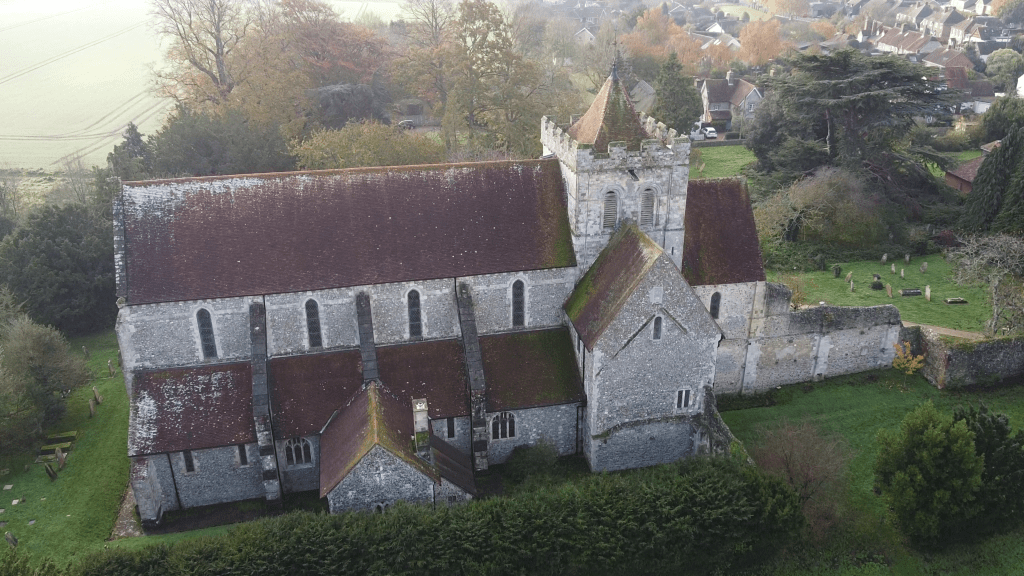
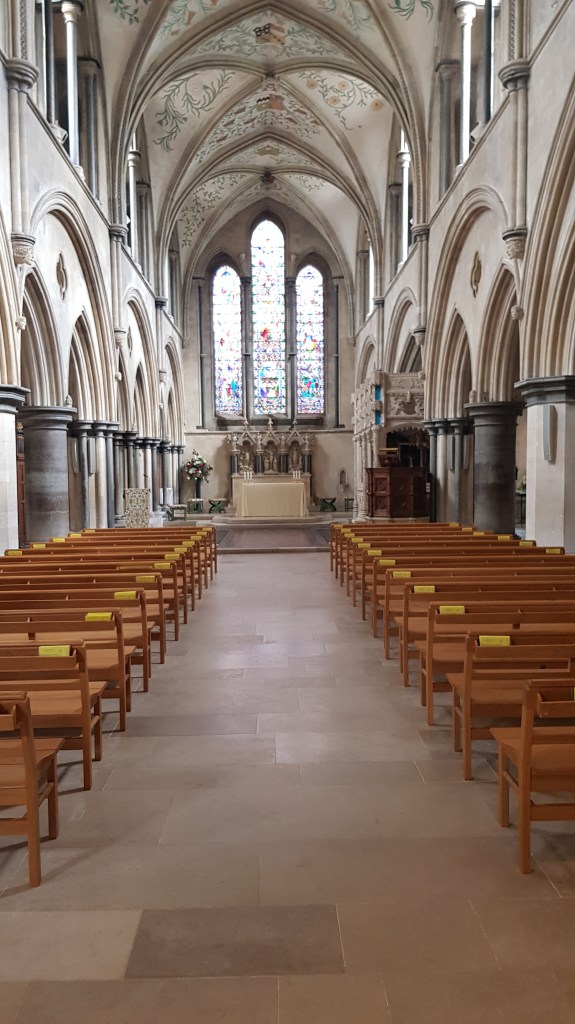
We make our way into the church to explore more, as there was a church here at the time of the Domesday Book, this was destroyed to make way for the priory which was established by monks in Normandy, and when the priory was disbanded in the reformation, part of the priory church lived on as the parish church. Walking in, the interior certainly is wonderful, with a mix of Late Tudor, Norman and Victorian restoration, you can see that all the different styles are beautifully looked after and it’s a beautiful place to enjoy. At the west end of the nave is a labyrinth picked out in coloured stone on the floor, this was a spiritual tool for worshippers and after the labyrinth the first thing you’ll probably notice is the height of the nave and the incredible Tudor painted roof.
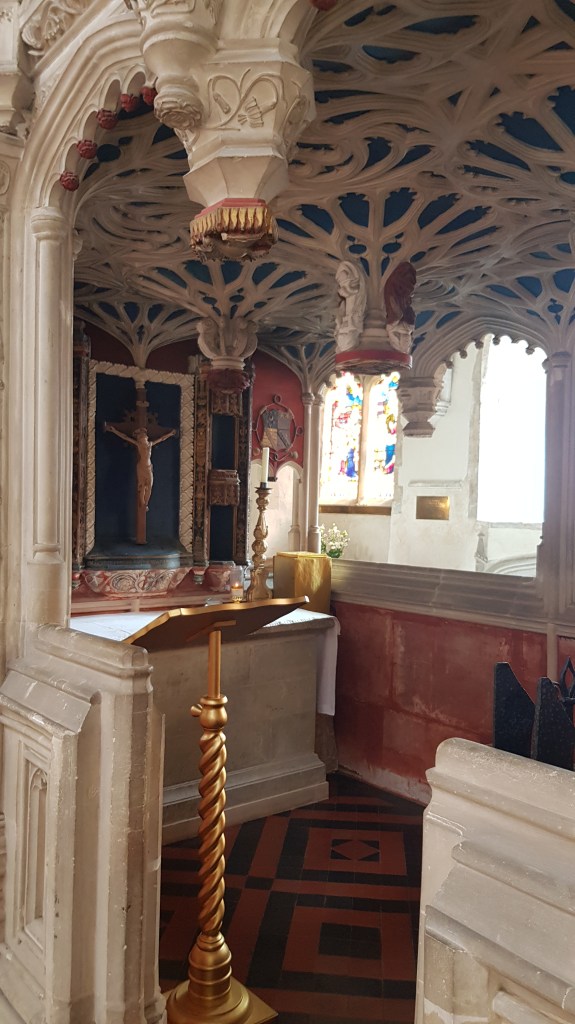

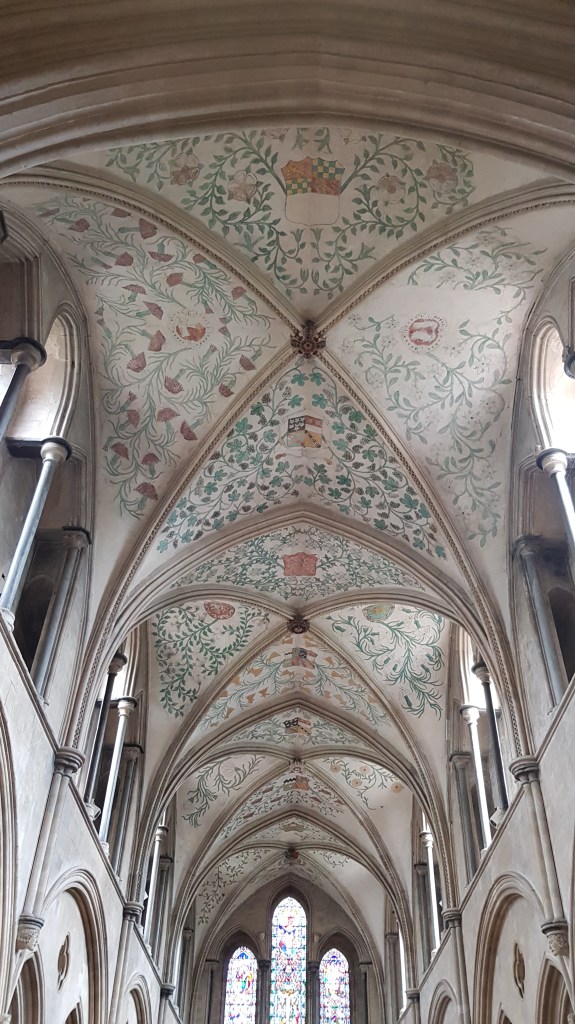
The painted roof was installed just before the reformation at the orders of Thomas West, who was the 9th Lord de la Warr, his memorial stands on the south side of the chancel. The memorial is an extraordinary piece of Tudor architecture with some of the finest 16th century carving seen anywhere in Britain. Thomas West commissioned a local artist, Lambert Barnard, to paint the ceiling of the nave with the arms and badges of his own and his wife’s families, entwined with flowers and foliage, this is quite unusual but so lovely to see in person.
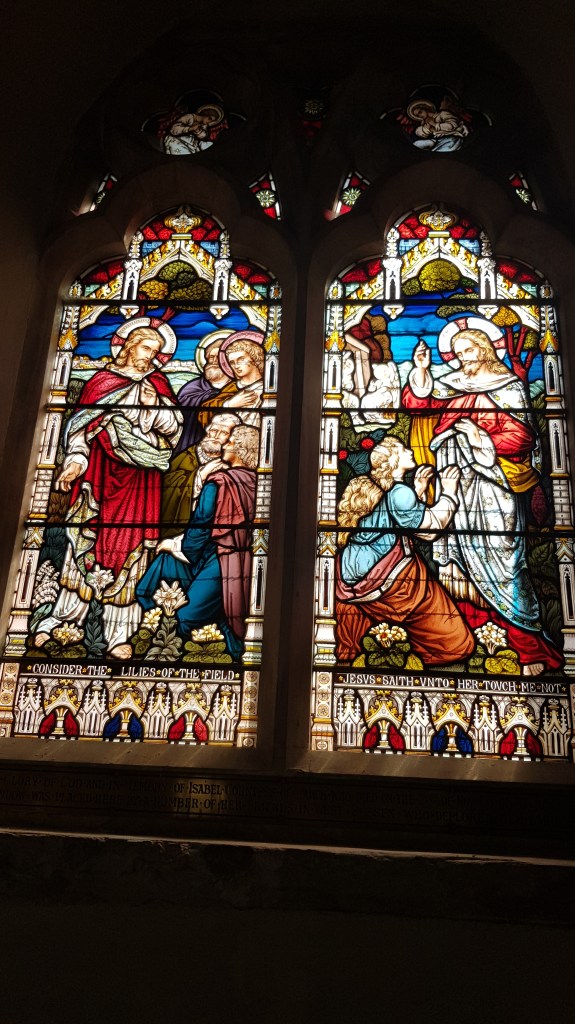
I loved looking around here exploring the many different decorative carvings of his coat of arms, the angels and Tudor Roses, it’s a mixture again of Gothic style with renaissance carvings and worth a trip inside to see this alone. The church has done a fantastic job looking after the priory and relies heavily on donations for the upkeep of this stunning place. One of my favourites to see though was the variety of stained glass windows that depicting many different religious stories and people. Of course the church is used regularly for mass and weddings, but there is an element here religious or not where you’re able to switch off from the world and enjoy the peace and quiet and appreciate all the work that has gone into looking after and maintaining the church.
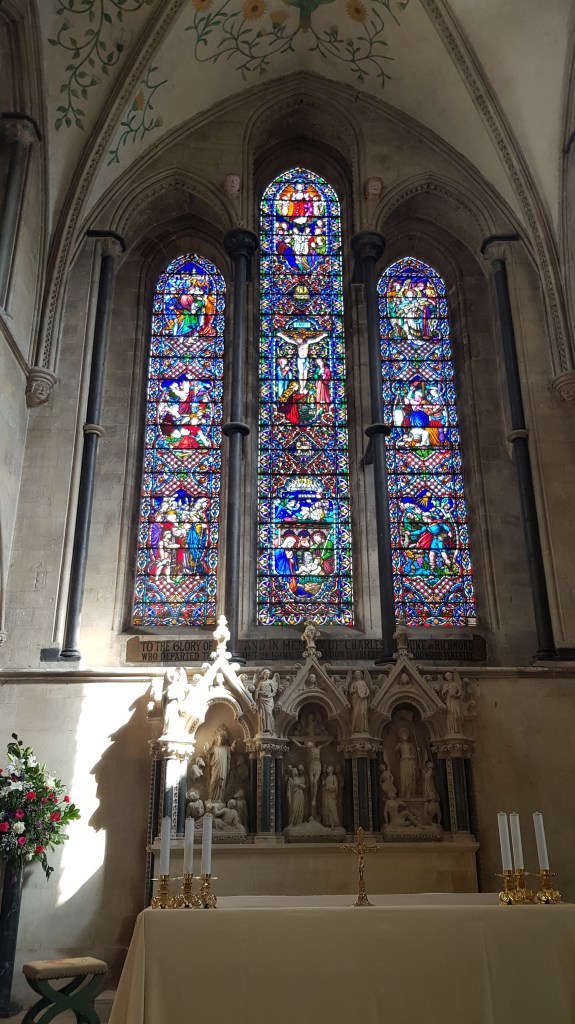
One particular and touching memorial is that of a hero named Billy Fiske, who was born Chicago in 1911, and sadly killed in action in 1940 whilst stationed at Tangmere Aerodrome during the Battle of Britain. He flew with the 601 Squadron and was one of the first American Serviceman to die in World War II and is buried in the south-east part of the churchyard which you are able to visit. He is commemorated on a beautiful stained glass window, on the southern wall of the church. This lovely memorial was installed in 2008 displaying a Hawker Hurricane along with the Stars and Stripes.
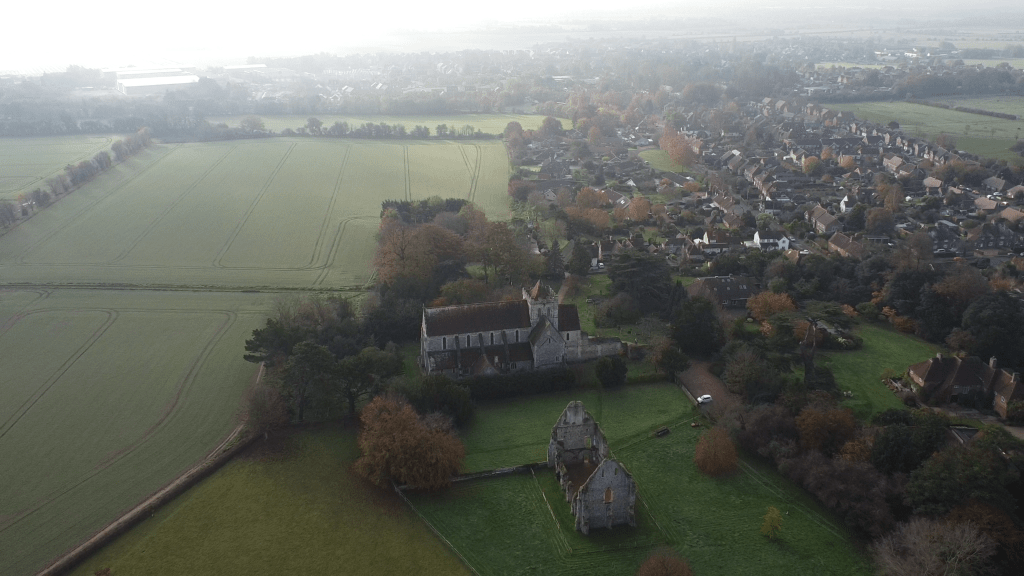
So we hope we’ve shared with you some of the highlights at Boxgrove priory, this place is rather special and a real gem in west sussex.
If you liked the blog please hit that like button, watch the full video below and consider subscribing if you haven’t already.
Till Next Time!
Discover more from Pinned on Places
Subscribe to get the latest posts sent to your email.

Great post 😁
LikeLiked by 1 person
This is really close to home for me! Love the photos. Thanks for sharing. Greetings from London.
LikeLiked by 1 person
After study a few of the blog posts on your website now, and I truly like your way of blogging. I bookmarked it to my bookmark website list and will be checking back soon. Pls check out my web site as well and let me know what you think.
LikeLiked by 1 person