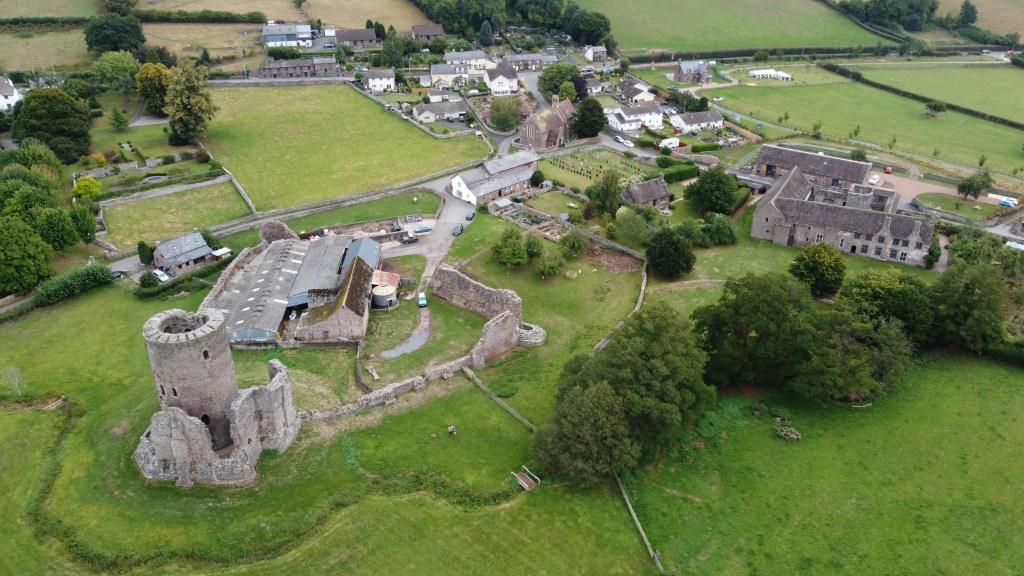
After a quick visit around the Brecon beacons, we went back and explored an incredible historic set of properties near Crick Howell and at the foot of the black mountains. Immerse yourself in Welsh medieval life by visiting one of the best castles and finest late medieval houses in Wales. The elaborate castle, with its ornamental stonework was once a strong defensive building and a splendid home in one until it was succeeded by the Court.
The two historic properties stand within paces of each other in an idyllic rural landscape at Tretower; A ruined castle with 13th century round keep and late medieval garden share the grounds with a 15th century medieval mansion called Tretower Court, which features fine timberwork and a walled courtyard. Together the two historic buildings, or, more accurately, complexes of linked buildings, show how priorities gradually changed from defence to comfort throughout the medieval period.

Tretower marks the period when castles were abandoned in favour of more comfortable, less fortified homes. There are two distinct sites at Tretower, each as valuable in their own way as the other: the later medieval house and, two hundred yards to the north-west, the remains of the 12th century castle stronghold, the round tower being added later in the period.
Situated around a courtyard, the medieval house had many different buildings from the 14th century. With alterations being made later in the 15th century, the oldest of those buildings are those along the north side, later the west range, south range and the east range was added over the next two centuries under different ownership. The main rooms are up stairs on the upper floor. Interestingly though, should the house have come under attack the occupants would simply gather up their possessions, round up the livestock, and head for the impregnable walls of the tower.
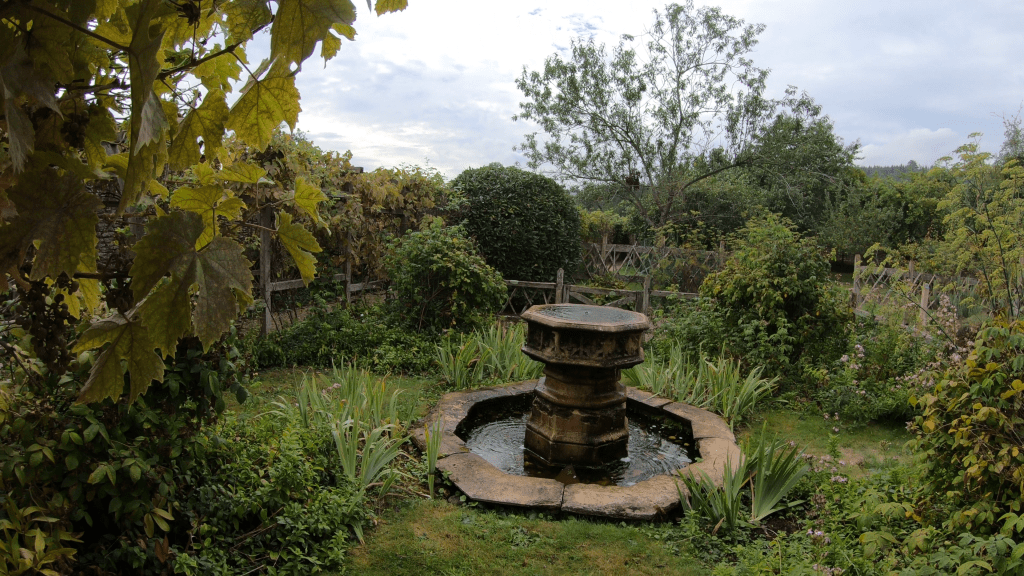
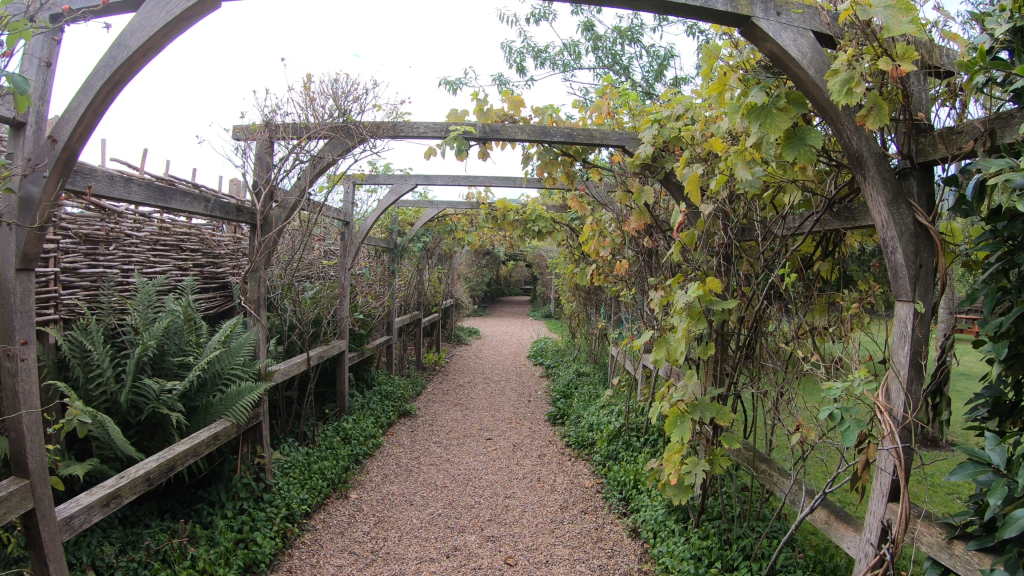
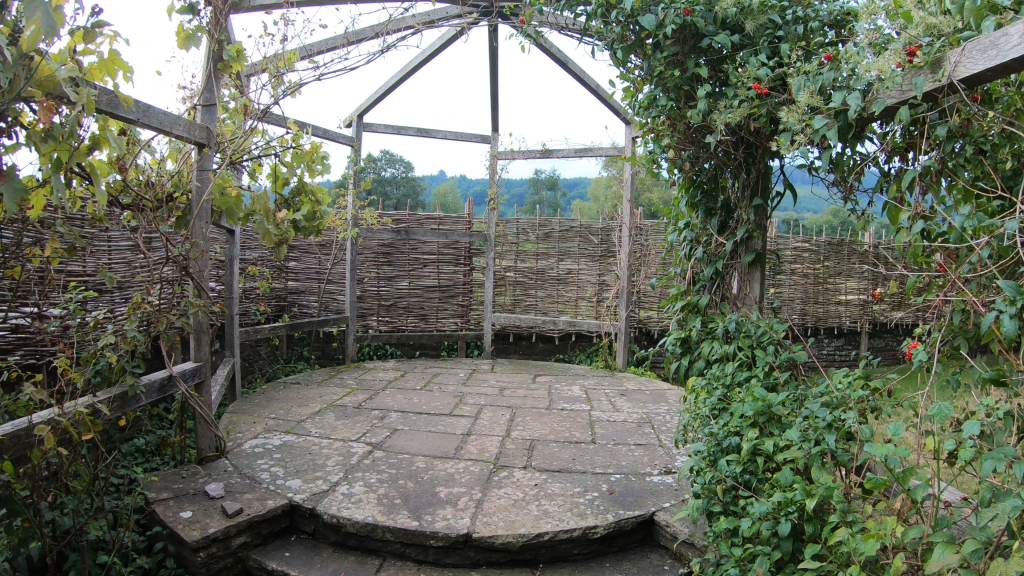
As we wander through the gardens here at the court you’re able to see the layout and typical status of a garden of this time. Sir roger Vaughan’s garden was a garden that complemented him being a wealthy cosmopolitan man. He had plants that were symbolic and ornamental such as the Madonna Lily, which was an symbol of the Virgin Mary, which also had uses as dyes or perfume scents. He also had an tunnel arbour that was wrapped with white roses, vines and honeysuckle and it dominated the garden especially when the roses were in bloom and their perfumes infused the summer air, other flowers that would have featured in a typical medieval garden are lilies, irises and pinks and violets, he also placed a beautiful dripping fountain at the centre to show of his high status. This garden was a place for quiet contemplation, or maybe a place for gossip, away from prying ears and eyes.
In the following century the new domestic building was rebuilt by Sir Roger Vaughan. Vaughan’s mansion boasts some wonderful timberwork, particularly in the west and north ranges. Robert’s son Sir Thomas Vaughan created a wall walk and the impressive gatehouse entrance we se today. Around 1630 new windows in a classical style were inserted in the medieval walls. The Vaughan’s supported the House of York in the Wars of the Roses, and when Henry Tudor took the throne as Henry VII the Vaughans actually attacked their own castle at Tretower in rebellion against the new Tudor king. They were reconciled to Henry and returned to settle at Tretower Court. The Vaughan family stopped using Tretower as their main residence in the 17th century and it became a farm, with some parts of the house used as barns.


The masonry and latrine turret on the west end may even have been built as early as the 1300s. The four major phases of building can clearly be seen from the central courtyard as can the later modifications added as late as the seventeenth century. As you move through the building from room to room, you duck through low doorways and climb up twisting stairways and creep into the dark of the latrine turrets you will begin to realise how much has passed through these walls and walked these steps. A very brief history of the place reveals a wealth of stories waiting to be told.
What makes Tretower so impressive is that the quality of the stonework is obviously more than was required for defence; windows and doorways were of a very high standard, a sign that Tretower was much more than a place of refuge, it was a residence and a status symbol.
The kitchen, buttery, pantry, servery and great hall are all on the ground floor in the west range, it’s here that a complete dining recreation has been laid out. The great hall adjoined a solar room then the kitchen and the lower storey seems to have served as storerooms generally. But with extensive research and restoration, Cadw have brought the place to life, by being able to mimic how it might have appeared back in the 1460s by the powerful Vaughan family. Some things to look for are the incredible range of furniture, utensils , pots and pans aswell as the painted high table in the Yorkist colours inside the great hall.


Leading in to one of my favourite rooms here was the great hall, it’s incredible to see the intricate wooden roof up above with the unusual details and the whole setting of the room, it’s very grand and you can certainly see how this room would have been the room to dine in. The tables have been arranged with the finest linen and tableware. But the one thing that is most eye catching is the incredible painted cloth behind the high table, it depicts scenes for the eventful lives of the Vaughan’s, kicking off with the battle of Agincourt in 1415 and ending with the siege of Harlech castle in 1468, this is so interesting to look at, and the room just breathes extravagance, which shows that what we think about medieval living being bleak and dark, actually was quite the opposite with those in powerful positions, or those with money, they lived extremely well and enjoyed showboating that too.
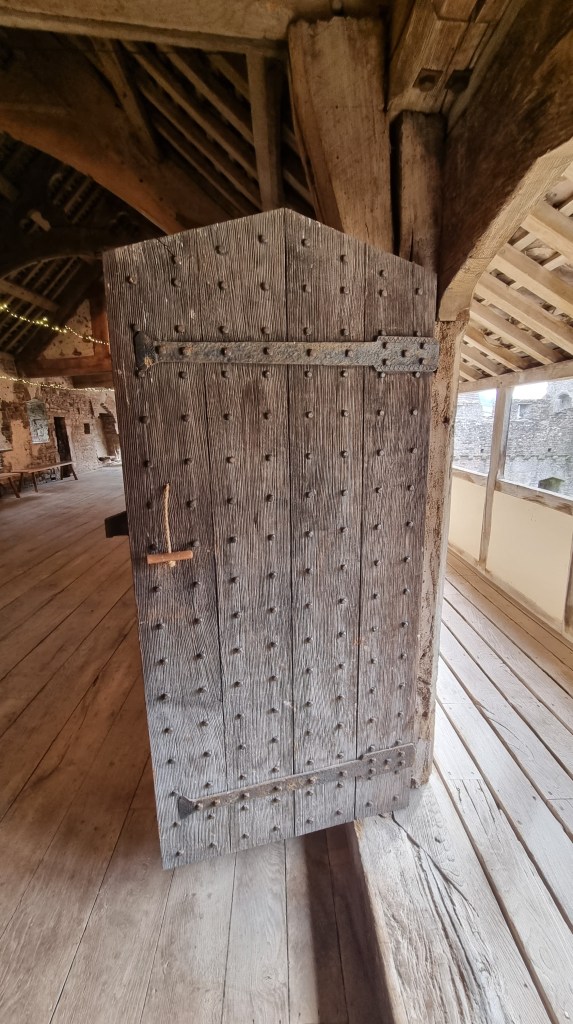

Vaughan also added a new west range, immediately doubling the accommodation available, building a brand new hall, solar and upper rooms. These upper rooms were large and most of these rooms have white plaster on its walls, but would have once also been painted with bright colours, murals and paintings of important scenes or a homage to the family’s name. All of the rooms would have been heavily furnished, with tables and chairs, fine woodwork beds and giant stone fireplaces would light up the room. One gorgeous room and a room that completely blew me away was the upper hall in the north range, this is nowadays a place were you can get married and have civil ceremonies, but it was once a chamber and would have been portioned off, it’s so impressive to see the 3 fireplaces and doors, windows and small latrines in each room.
Leaving the court and house we move onto the short and nice walk towards the castle here at Tretower, sometime around 1150 a stone shell keep was erected atop the motte, replacing the timber walls. Inside the shell were stone buildings including a hall and solar, or private quarters for roger Picard and his family. The quality of the surviving stonework places Tretower among the finest Romanesque remains of a Norman residence in Wales.


In 1233 Tretower was attacked by Richard Marshall, Earl of Pembroke, and suffered heavy damage. It was repaired by Roger, who added a large round tower to replace the earlier buildings above the castle mound.
After the Picard line died out the castle passed through several owners before the Berkeley family took control. The Berkeley’s main residence was at Berkeley Castle in Gloucestershire, but they were responsible for defending Tretower during Owain Glyndwr’s rebellion of 1400-1410. Then in 1415 Tretower served as the local gathering place for soldiers mustering to join Henry V’s armies for his invasion of France, an invasion that led to the English victory at Agincourt. Sir Roger Vaughan of Tretower fought at Agincourt, and was knighted on the field of battle before dying of his wounds.

The keep stands 3 storeys high, with a cellar beneath ground. It was entered at first floor level and a bridge connected the new tower to the earlier curtain wall of the shell keep. You can still see the fireplaces and windows on each floor of the tower. The walls and earlier domestic buildings were strengthened to create a wall walk, part of which still survives.
The enclosing walls of the shell keep are in partial ruins, and only part of the 16th century gatehouse remains. The exterior of the circular keep is extremely impressive, though you can see large cracks in the walls that make you wonder how it is still upright. It’s quite amazing to walk around and up the stairs of the tower being able to see all around and work out where everything would have once been.


Just outside the tower are the remains of a big circular bread oven, and the under croft of a vaulted solar, or possibly private chambers for the lord and his family. The entire interior of the tower is empty, with only holes in the inner walls showing where floor joists divided the tower into levels. But there is one very fine fireplace set into one wall, and you can mount a set of stairs set into the thickness of the wall for a good view over the castle site and its surroundings.
What I really like about the tower is the fact that it’s circular but set with a square too, it was pretty fashionable at the time to do this as well. They actually built the outer square part of the castle first, then to show off their wealth and popularity, a circular tower was built after inside. Some of the fireplaces and the windows are really impressive when you see it all weathered and broken down. Something to have a look for is the different carvings in the walls of the circular tower that has dates and initials and some drawings too scratched into the thick walls.

The whole site is very impressive, there is a ton to see and take in, and as with most Cadw sites the obligatory toilets, café and gift shop with kind and friendly staff waiting to invite you in. The grounds are really charming and they have plenty of picnic benches, aswell as being dog friendly which is a nice touch.
If you liked the blog please hit that like button, watch the full video below and consider subscribing if you haven’t already.
Till Next Time!


 Pinned on Places
Leave a comment