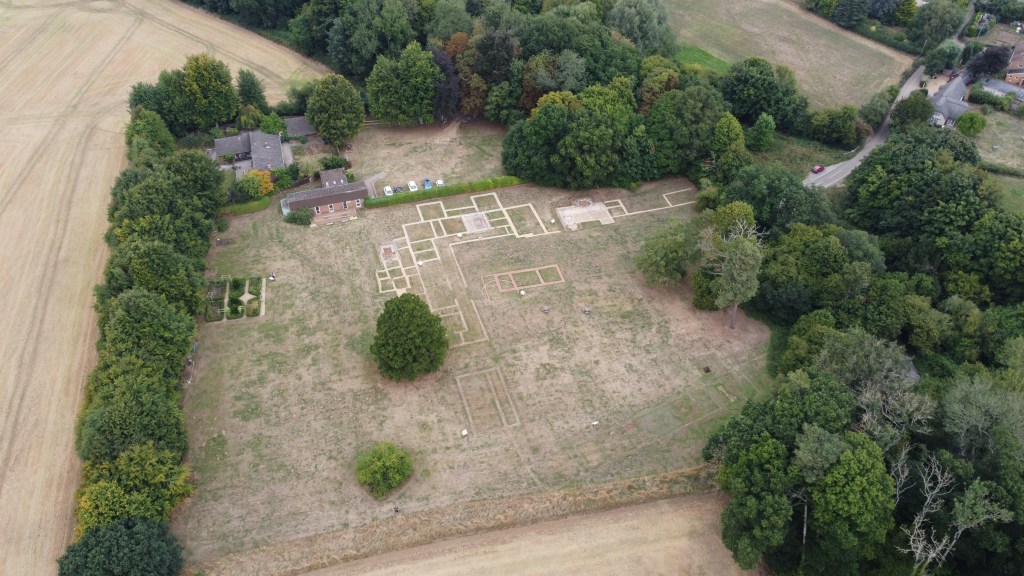
Rockbourne villa was actually discovered in 1942 by a farmer named Morley Hewitt, he discovered the remains of the mosaic floor by accident, small pieces of oyster shells and roman tiles were found when trying to dig out a ferret in the fields, upon this discovery, he purchased the lands and began conducting excavations to reveal the incredible villa as we see it today.
The history here is long and extensive, with many different phases of construction and over 400 years of use, the great thing about this site is that they have beautifully displayed the importance of this site throughout it’s time. After being passed down through family lines and brought out by many different people, it was of course always maintained, renovated and loved by all it’s owners.
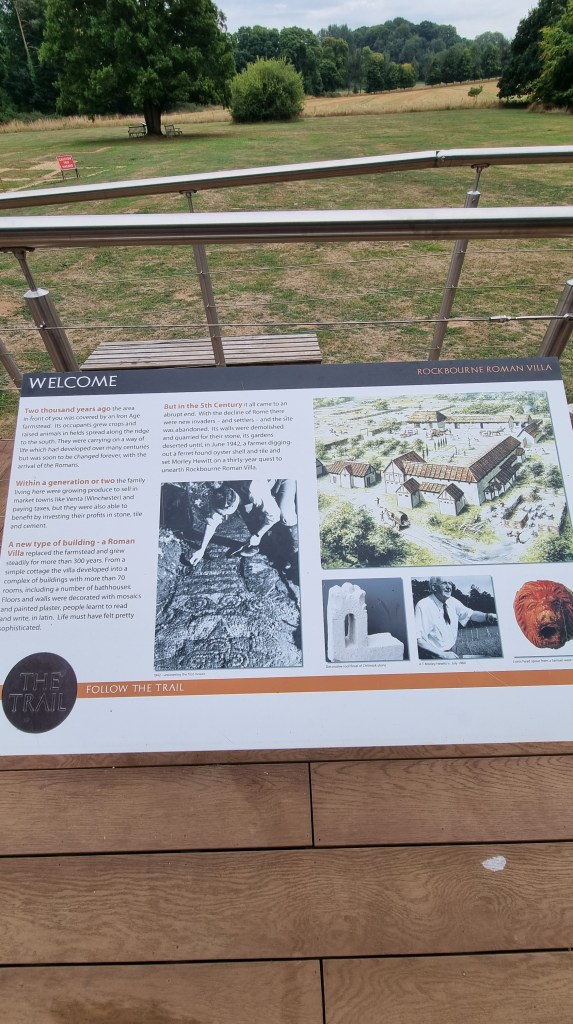
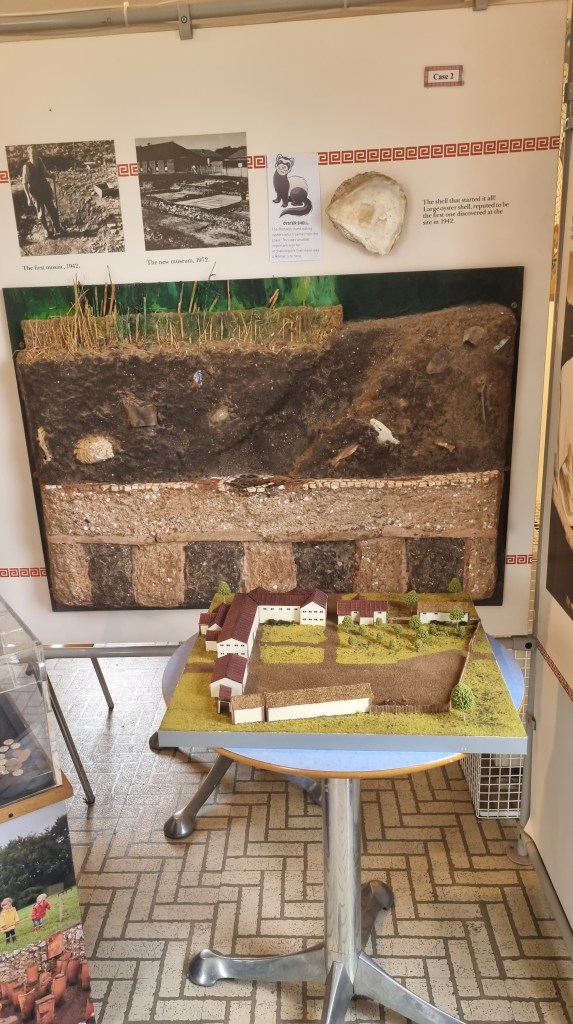
Beginning life, the villa starts out as a simple Iron Age roundhouse and is soon after replaced by the first phase of the roman villa. This phase comes from the influence of Rome that seeped into Britain and made it’s way across the different barbarian tribes. Through the through excavation work we can identify the multiple stages of development that the villa had gone through before the occupants were happy with their home. What is amazing is the more and more additions that were added to the villa, including the multiple bathing areas and the huge dining area. The constant expansion would have suggested that the owners were wealthy, but also that they were desperate to keep up with the roman architectural traditions of the time. Over 70 rooms have been excavated, though it seems likely that only 40 of these were in use at the height of Rockbourne’s prosperity
Rockbourne is home to some immaculate mosaics, typical of Roman Britain, and they can tell us a lot more than just being decorative. We can see how the layouts of some rooms would have looked thanks to mosaics, specifically in the dining area where the best-preserved mosaics at Rockbourne are found. The Romans typically did not want to waste money on mosaics if they were going to be covered up with bulky furniture, so in the triclinium there are blank areas of mosaic showing where benches and tables would have been placed, leaving the expensive artwork still visible to be shown off to guests, and appreciated by the landlord.


Other mosaics can be found throughout the villa, which have been carefully maintained ever since its initial excavation in 1942 – however, in the 5th Century AD, at the decline of the villa’s use, some of the mosaics were intentionally broken up, and it is not fully understood why. This could have been to ruin the value of the flooring so that it became worthless to any potential robbers. Mosaics found in the East Bath-Suite show intricate geometric patterns, although some of the mosaic is missing, there is enough of it to understand what the full picture would have looked like. Mosaics such as these would have been laid by a skilled professional and would have by no means been a cheap job.
We know that the villa would have been a high-status building, as not every Roman family had a villa. We are also fortunate in understanding its surroundings and can see that it was possible that the wealth of this household could have come from the trading of resources to markets on the hillfort, and possibly across a wider area. We can see this through the discovery of an ancient Greek jar that would have a large oval body and two handles on the side, amazingly you can see these inside the museum on their displays but this would have been used to transport heavy quantities of wine, olive oil and fish sauce as it was a roman delicacy.


If the elaborately patterned mosaics, enormous bath suites and architectural beauty were not enough to imply a wealthy household, then the immense coin hoard found within the villa surely are. Over 7,000 coins dating between 295-305 AD were found in a two-handled New Forest-style pot, that was buried outside one of the villa’s walls. There are two theories about why so much money was left in the ground; one is that there was a financial struggle and they were hiding the money away for safekeeping in case they had to flee. The other, is that it was a ritual offering to a Roman god. It is thought that the large hoard could have been left as a gift to a god/goddess for good fortune, which is a possibility, because it was stored in a decorated pot, and packed with organic material.
One of the most remarkable finds you will see on display is a hoard of 1,717 coins. 493 of these coins are currently on display with the original pot; a grey storage jar which was buried one foot below the surface. It is likely that the Hoard was a ritualistic offering to the Gods, perhaps with the hope it would bring the landowners a good harvest.


During excavations in 1965, outside the remains of a large dining room, an adult skeleton was found buried face down in a shallow grave. The reason why this man should have been buried at the villa is unknown, as is the date of his burial, although it is likely he was buried after Roman occupation had ended. The full skeleton can be seen on display in the museum.
When visiting a roman villa you are most likely going to see a hypocaust, this is a type of heating that was developed by the romans who used it in warm and hot rooms of the baths but also to warm private houses, It works by creating an open space below a floor and heated by gases from a fire below that allows the passage of hot air to heat the room above. So although you can’t see the system of pipes that would have heated the walls and the upper rooms, parts of the hypocaust which would have warmed the mosaic floor of one of the villas luxurious bath suites still remain and we’re able to see that today.

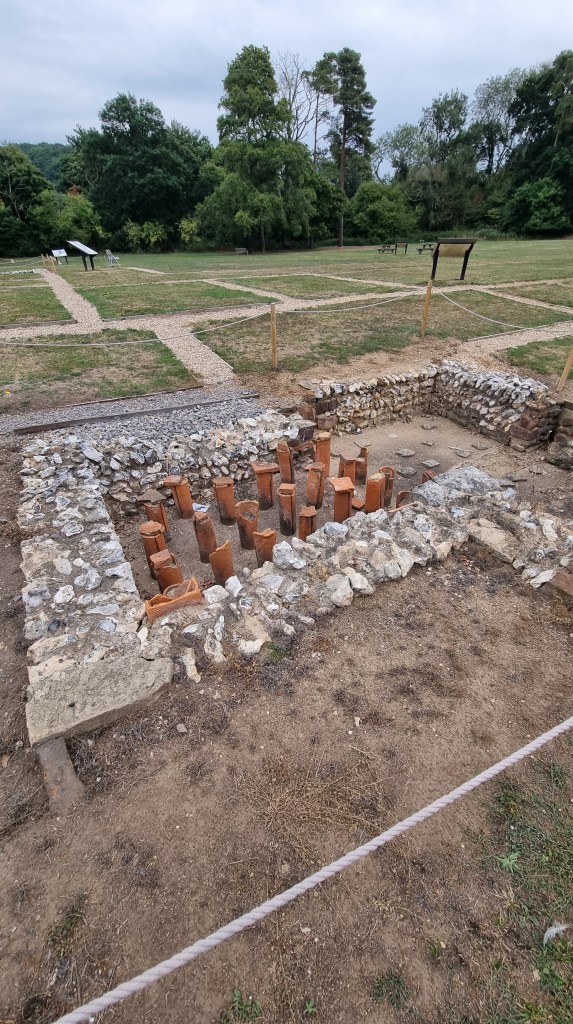
A grand set of baths was built on new ground, detached from the living quarters, which was cleverly thought out as fire was always involved with heating. It was decorated with mosaic tiles in the 4th century and the surrounding walls would have been covered with finely painted plaster. At some point in time a cold plunge was built destroying part of the mosaic and this was re aligned at least twice and the hypocausts were filled in and cemented over as the rooms were used more for accommodation. It was this area itself that Morley unearthed the first sightings of the villa, revealing the very impressive eight pointed star of the central pavement.
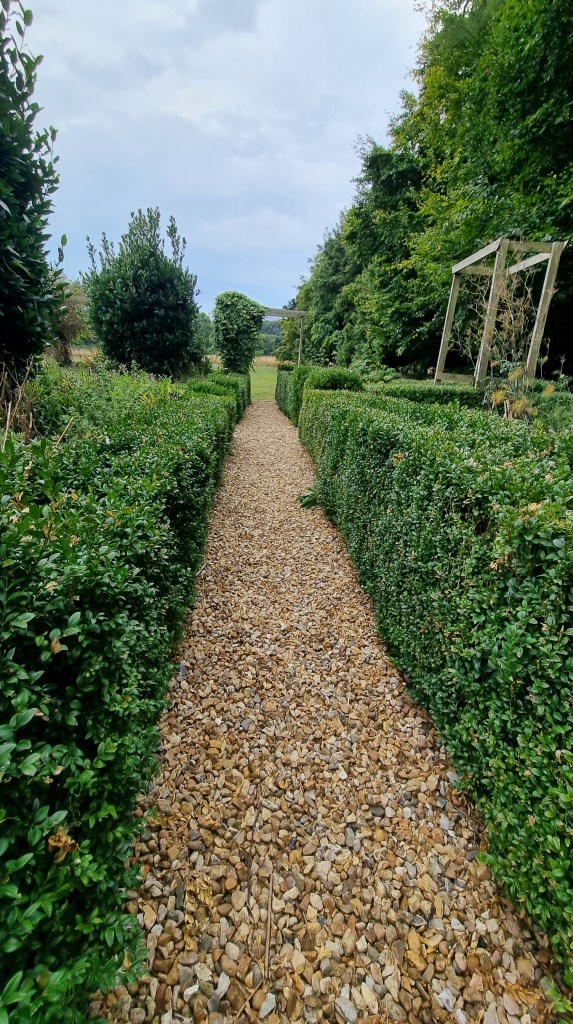
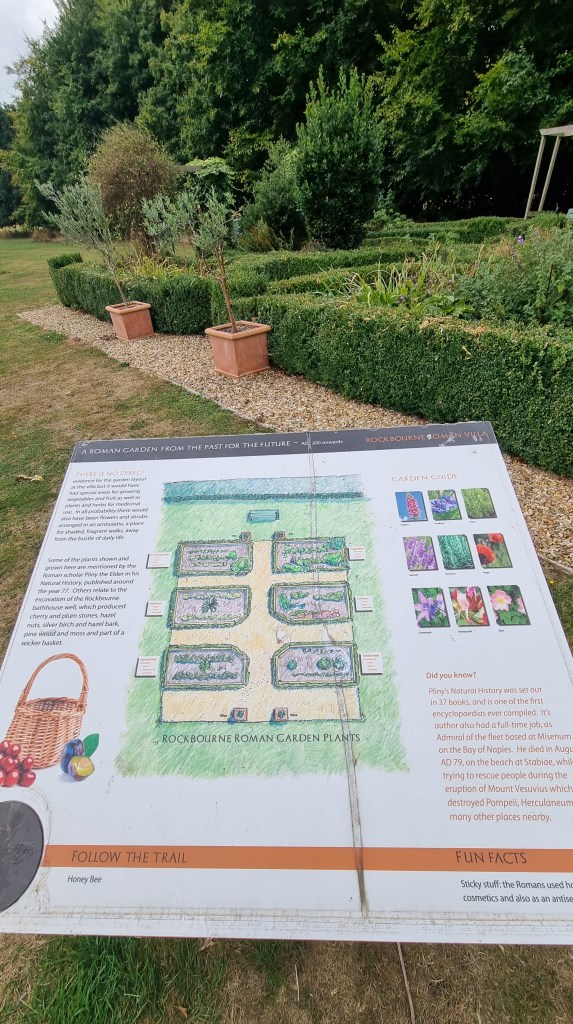
A garden has been placed where they believe one of the gardens would have been here at the villa, it’s not to the exact layout, but it would have had a place for growing vegetables as well as fruit and of course herbs for medical purposes. Like with many other roman gardens, this would have had beautiful shrubs and flowers arranged in a way that it could be used for a shaded area, away from the busy villa life. More findings inside the bath house which produced some cherry stones, hazel nuts, moss and part of a wicker basket.

Though much of the excavated remains have been filled in to prevent weakening, enough still remains to give us an idea of how the complex of buildings looked. The major structures have been outlined in gravel so that visitors can identify the outline of buildings.
There are so many unanswered questions about this immense villa; why was it suddenly abandoned and left to the elements? What were the people preparing for when they buried the coin hoard? But these questions are even more reasons to go and find out and discover for yourselves!
Another really great thing about visiting Rockbourne is with the purchase of your ticket which is under £5 for an Adult you can return as many times as you like throughout the year and on site toilets and free hot drinks aswell as very knowledgeable and friendly staff happy to chat and answer any questions. It really Is quite the hidden gem in Hampshire. One thing to note is that they are now shut for winter, but we really would love to encourage you to visit when you’re in the Hampshire area.
If you liked the blog please hit that like button, watch the full video below and consider subscribing if you haven’t already.
Till Next Time!
 Pinned on Places
Leave a comment