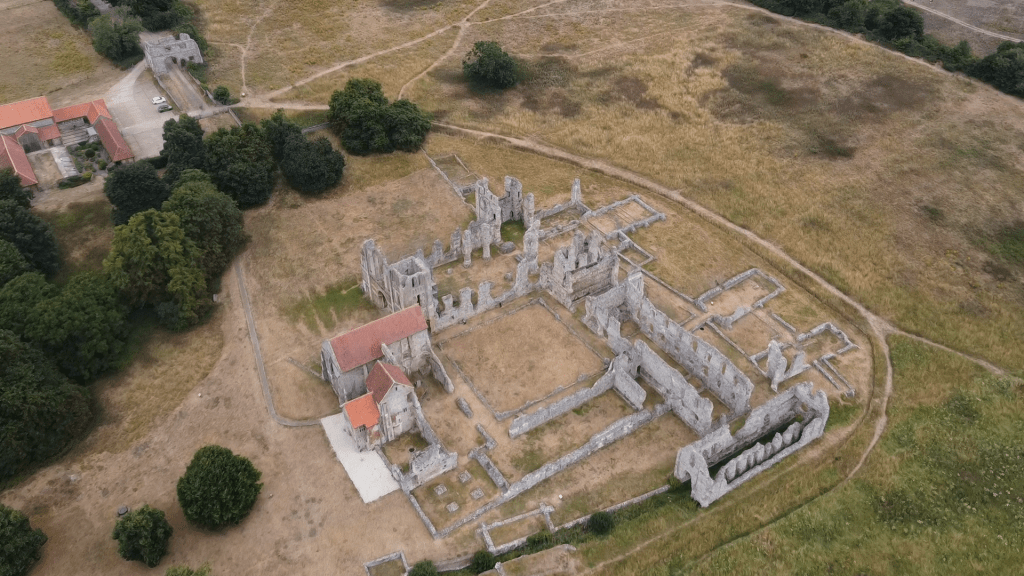
After our walk around at Castle Acre just literally down the road from here we visit Castle Acre Priory, with over 450 years’ worth of being the home and workplace to monks and their servants, the priory is a significant example of the first Cluniac order of monks to England, join us for an explore at these extensive and stunning ruins.
Castle Acre Priory is one of the many Norfolk castle ruins which remain very much intact today. It oozes historical importance for both Norfolk and for England, and as you wander around the well-kept grounds, you get a very good idea of what it must have been like to live and work here. Known as one of the largest and most impressive monastic sites in England, the site is home to the first Cluniac monks, hence the importance of this particular ruin. Interestingly it’s also one of the best preserved priories in the UK and after walking around here you can very much agree with that statement.
Founded in 1089, the priory was originally situated within the castle, if you are interested, in our last video we explored here and its extensive remains, but it proved to be too inconvenient so it was moved just down the road to its present site about a year after the castle was built. This site was more assessable, by the river Nar aswell as increased resources that enabled them to begin the construction of the existing buildings at the priory. But building works progressed slowly, the church was not blessed until around 1146-1148 and its west end was completed only in 1160s, the monks would have moved from the castles bailey to their new site in the 1100’s but they would have lived in timber buildings whilst the rest of the priory was completed over the following 50 years. Towards the end of the 13th century, the priory suffered when England went to war with France due to its French connections even though most of the monks here were English. The community shrank, more than likely due to money troubles and in 1325 the priory obtained English status and later in the 14th century it saw a revival of a number of improvements to its buildings and the community was able to build again once more.

During this time, the priory grew wealthy again with royal grants from both King Henry the first and his grandson Henry II, they exempted the priory from tolls, which back then was a very valuable benefit for a monastery with such extensive lands as castle acre. Nobles, merchants and even royalty stayed at the priory, this included King Henry III and King Edward the I with his queen Eleanor, who stayed here on the way to the shrine at Walsingham.
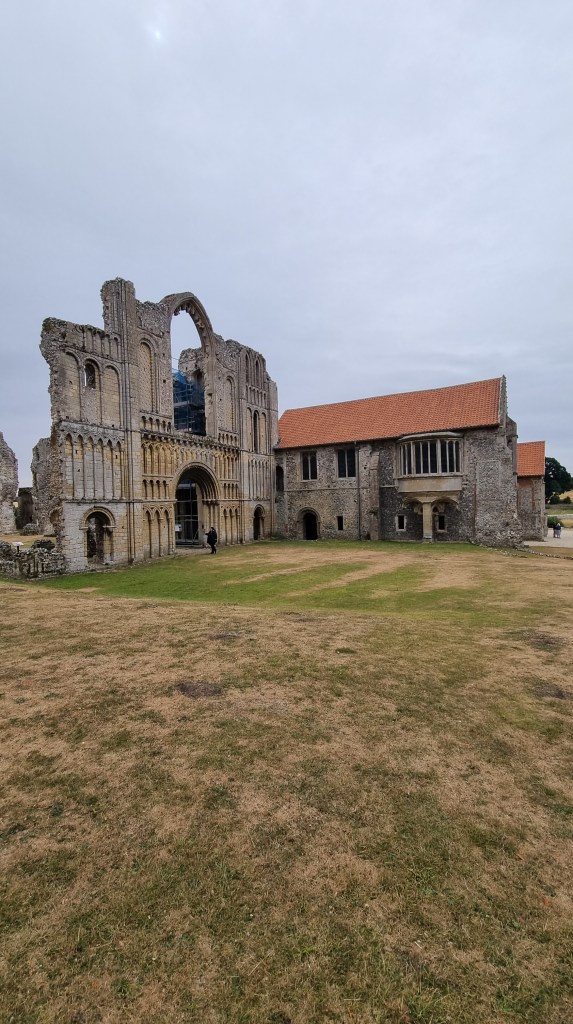
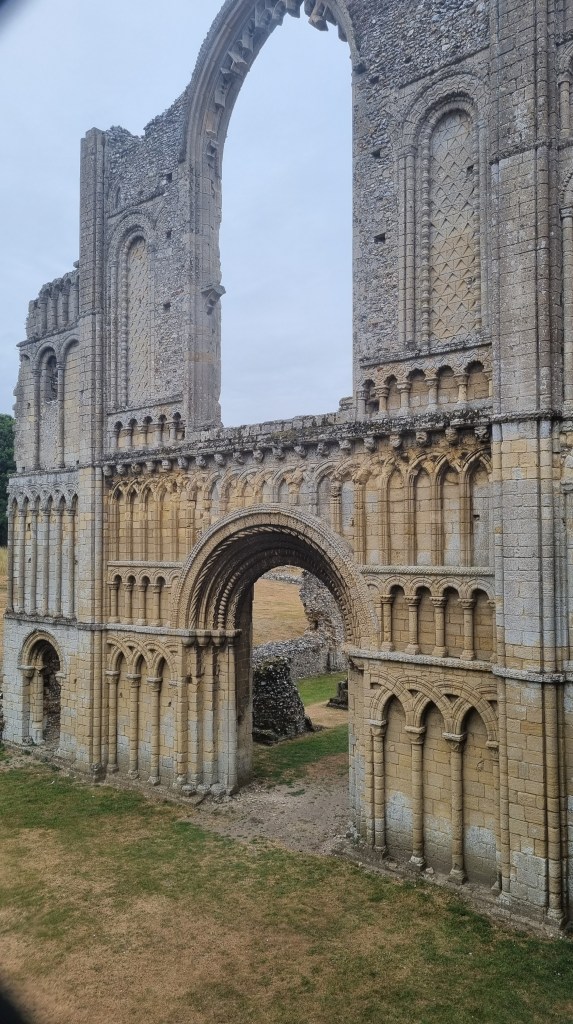
Making our way over to the priory, your first line of sight is the incredible west end front of the priory, we were just wowed by this as many people more than likely are, you can see how sophisticated and flamboyant the decoration is, it stands almost too its original height and the arcading and carving is just mesmerizing to look at. Its said to be one of the glories of English Romanesque architecture and just by looking at it you would rightly assume this place was built for the rich and powerful. The west front acted as a spectacular introduction to the interior of the church beyond the three doors. The richly decorated carvings include some very typical and distinctive architecture of the time, these include, the interlaced arcading and the zig zag decoration lacing the arches on the doorways and windows and many outlandish corbels. This style is thought to be decorative, not symbolic and Is a prominent reminder of the priory’s patrons, the Warenne earls of Surrey, who wanted to show their religious devotion by building to the highest quality they could regardless of the expense. Later in the 15th century, the west front was altered dramatically when the smaller round headed windows were knocked and replaced with larger windows with a pointed arch. Even with this and the exception of the loss of the tops of the two towers you are still very much reminded how grand this building once was and actually still is.
What I really like about the visit here is the numerous sculptures and relics found, one inside the information centre shows a woman’s head carving, this would have been from the 13th or 14th century. In the middle ages it was very common for wealthy patrons to be commemorated in a sculpture, a painting or in the stained glass of the churches that they would have supported. Its very likely that the many gargoyles and sculptures would have represented a real life individual of the time.
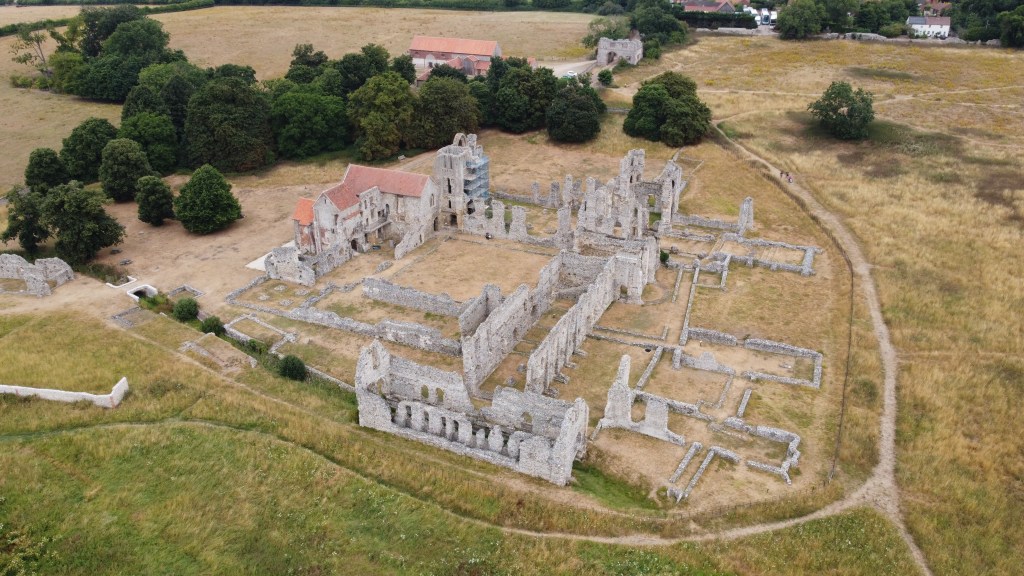
Like many monasteries, castle acre contained all of the buildings which a community would have needed, these included, a church for the pilgrims and the services of the monks and domestic buildings like a refectory for communal meals, kitchens, a important chapter house, lodgings for the prior and many store rooms which here were all grouped around an enclosed courtyard or cloister. Just slightly away from the cloister, a infirmary was built and used by the monks who needed to recover from any illnesses.
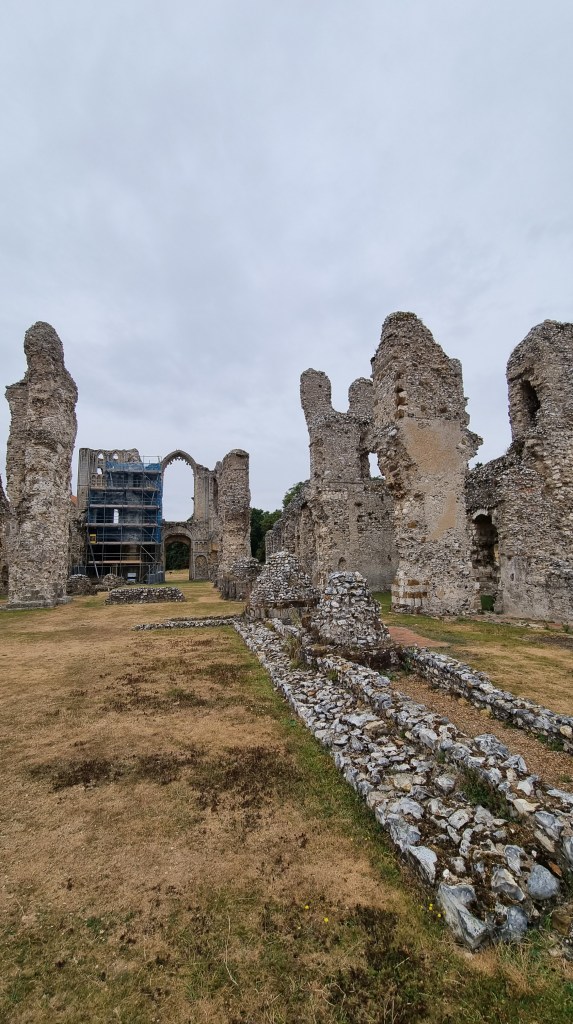
The nave of the church is the oldest part of this priory’s ruin, but like many of the other priories in Norfolk such as Binham Priory, it was dissolved in 1537 under Henry 8th. This priory was eventually passed to the Coke family of Holkham hall where both the priory and castle are still owned by the present earl of Leicester, although again this site is also maintained by the English heritage. This church is pretty remarkable; the nave had seven bays and a choir of two which were both aisled. It’s also so impressive to be able to wander the alter and take in the views.
The cloister is to the south of the nave, as mentioned before the cloister was a courtyard that surrounded the domestic quarters of the monks and was both geographically and symbolically the centre of the priory. Most of the buildings around the cloister are ruinous, but its quite easy to map out today. The chapter house and dormitory are on the eastern side and the lodgings for the prior to the west. In many orders, the monks would have spent a considerable amount of time in the cloister, when not singing services, the monks were expected to sit in the cloister for religious study.

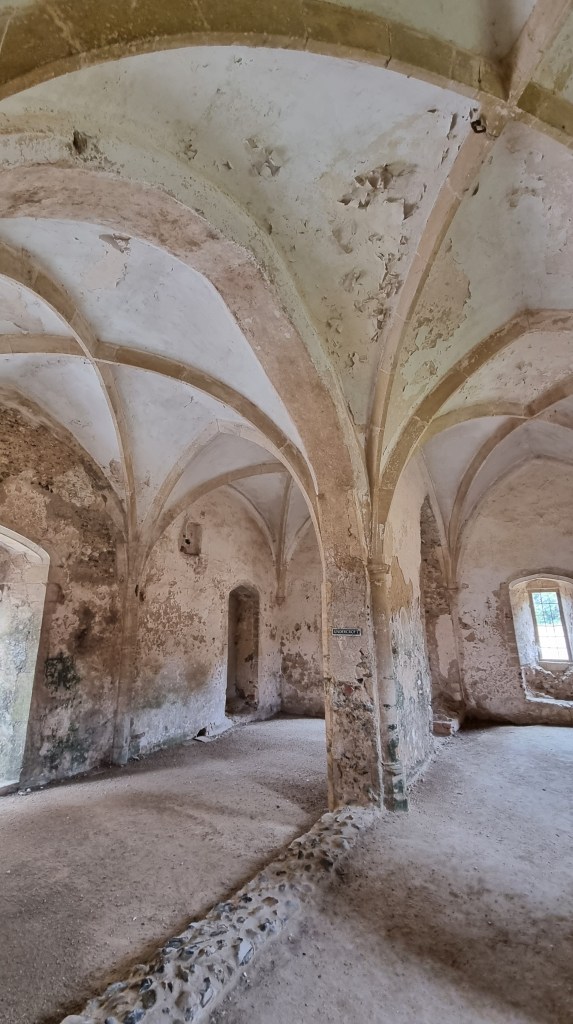

Much of the eastern range was occupied by the massive dormitory on its upper floor, this was a single long room in which the monks slept and was built in the mid-12th century. Later on in the Middle Ages it became a common practice for the monks to be given individual cells, for privacy and dignity rather than sleep together in a single long room. Unfortunately no real sign of this indicated ant partitioning of walls, but it was common in monasteries of that era to do so.
This building was the latrine block, it was carefully designed and situated and convenient for a large community of monks. It contained latrine functions at cloister level for the day and adjoining the dormitory for the night time. It is one of the best preserved in England and is a two storey building. The vaulted lower level could be entered from the cloister during the day and the upper floor, was connected by a bridge and was available during the night for the monks. A total of 24 toilets were provided and they consisted of wooden seats with holes in the centre as a normal toilet would have, but they were designed to be set over chutes that ran down into a stone lined channel, running water would diverted here from the river Nar carrying the waste away.
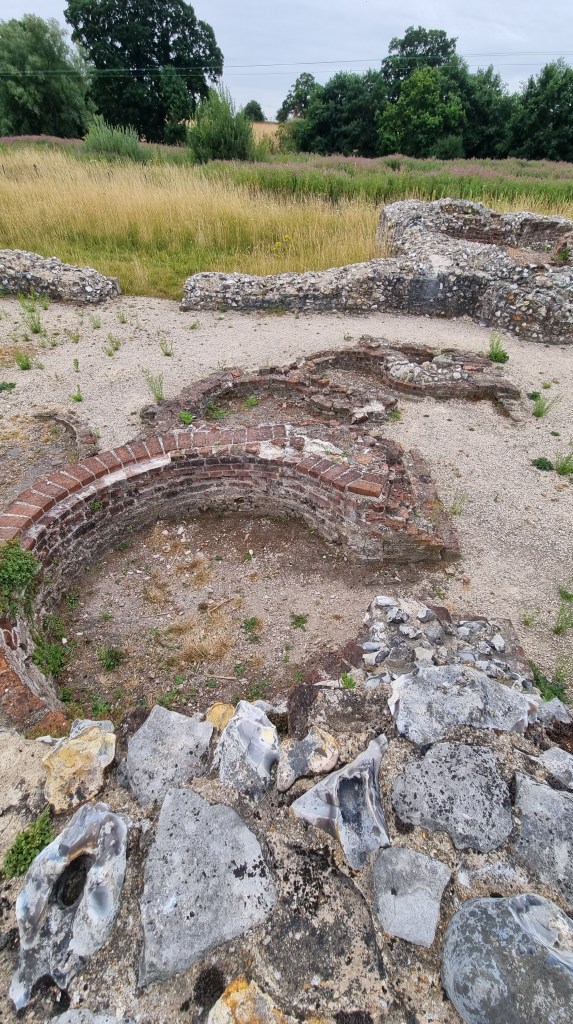
We then wander to the western part of the monastic precinct at the 19th century barn and farm buildings which replaced a medieval barn demolished in 1838. To the south of this is a court enclosed on the north probably constructed in the 15th century and may have included a granary , storehouse, corn dryer with a brewery and malthouse, some would say this would be the most important building of the priory but it’s really fantastic to be able to see the outlines of the kilns.
The Prior was the head of the site, he was in charge of the monks and his rooms were bigger and more luxurious than ours. The Outer Parlour is on the ground floor where the prior had and held meetings. But the monks were only able to get to it from the Cloister and visitors could access it from the front entrance. In the corner, you’ll see a spiral staircase that lead to the surviving upper rooms . these rooms enclose the priors great chamber and solar. The chamber was lavishly decorated in 1510 and a large fireplace was added as was the large bay window, which once was filled with stained glass bearing his initials and his motto. The ceilings were also painted with red and white roses, symbols of the Tudor king henry VIII who ironically was the one later to demolish and close the priory down. The windows were also purposely facing the west end church front so the prior could look upon his estate and his surroundings.

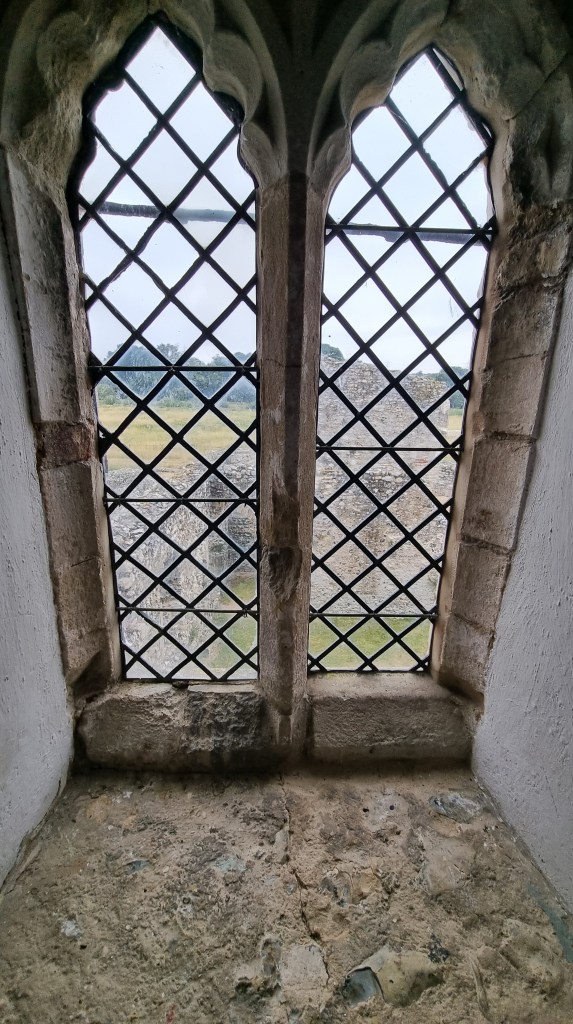
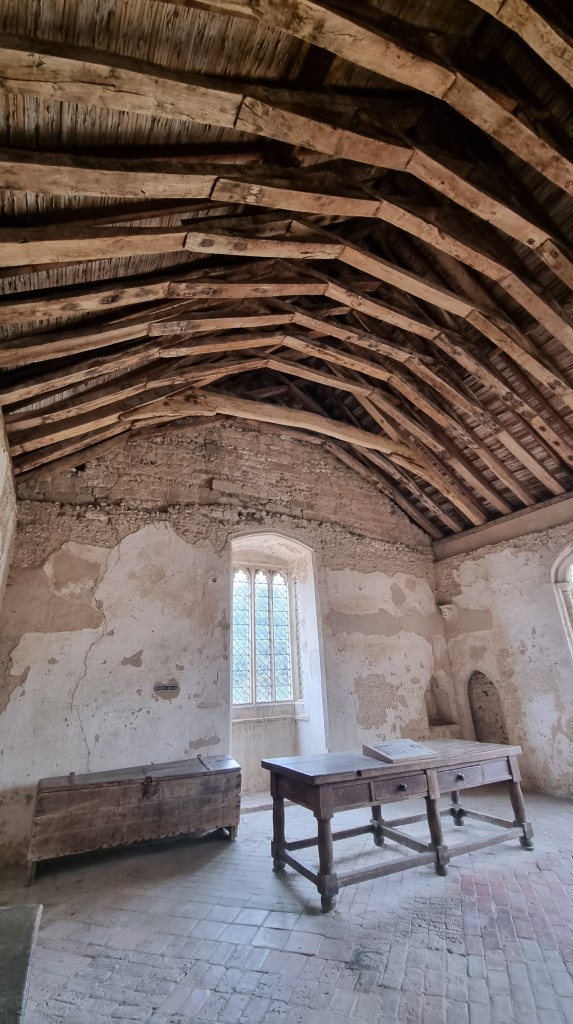
Just off the chamber is the priors chapel, this room was both a religious building that was devoted to worship but also a badge of rank. Again, its lavish decoration was very elegant and showed of the wealth of the priory, but it was also very similar to the chapels of royal palaces and castles. The chapel contained numerous fragments of painted decoration with tiny patches of clothing, a crown and stars with gold. The fireplace and the windows are so interesting to see and it’s just so beautiful and nice to see these buildings still very much in great condition.
Before entering the site of the priory you are able to take a visit around the medieval herb garden. It is a delight to walk around and has been planted with herbs commonly used in a medieval monastery. The herbs are arranged into four sections based on their different uses: to heal the sick, to mask bad smells, to flavour food and drink, or to decorate the priory church. It was the physician’s job to work out how to restore the balance of a person’s humours if they became ill, and so plants and herbs were prescribed to redress the balance. A cooling herb would be used if you were considered to have too much blood, or by using sage and infused with sweet scented leaves in water they would make eyewash. It’s really interesting seeing the skill of medicine back in the day using just natural ingredients and knowledge.
This place is wonderful, like the castle just up the road, it is so recommended to visit both to have the full experience and you can totally understand and see these two sites coming together and the importance it once had. The site is very well maintained with a shop, lots of information and the usual toilets, free parking and shop. You’re able to get hold of an audio tour with your ticket or you can walk the ruins without and grab a sense of imagination where people would have once walked and slept, either way Norfolk has not disappointed us, infact we hope to return again soon to enjoy more wonderful places here and hope you will join us too.
If you liked the blog please hit that like button, watch the full video below and consider subscribing if you haven’t already.
Till Next Time!
 Pinned on Places
Leave a comment